


Page 378 - Review of Medical Microbiology and Immunology ( PDFDrive )
P. 378
mebooksfree.com
mebooksfree.com
mebooksfree.com
mebooksfree.com
mebooksfree.com
mebooksfree.com
mebooksfree.com mebooksfree.com Name Genome mebooksfree.com Limited Transcription 367 mebooksfree.com
mebooksfree.com
mebooksfree.com
CHAPTER 43 Tumor Viruses
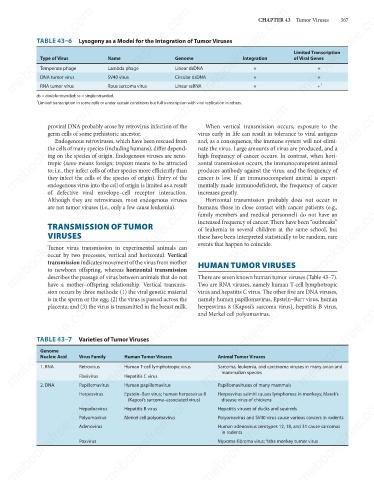
TABLE 43–6 Lysogeny as a Model for the Integration of Tumor Viruses
of Viral Genes
Type of Virus
Integration
+
Lambda phage
Temperate phage
+
Linear dsDNA
SV40 virus
DNA tumor virus
Rous sarcoma virus
+
RNA tumor virus
Linear ssRNA
1 ds = double-stranded; ss = single-stranded. Circular dsDNA + + + 1
Limited transcription in some cells or under certain conditions but full transcription with viral replication in others.
mebooksfree.com
mebooksfree.com mebooksfree.com mebooksfree.com virus early in life can result in tolerance to viral antigens mebooksfree.com
mebooksfree.com
proviral DNA probably arose by retrovirus infection of the
When vertical transmission occurs, exposure to the
germ cells of some prehistoric ancestor.
and, as a consequence, the immune system will not elimi-
Endogenous retroviruses, which have been rescued from
the cells of many species (including humans), differ depend-
nate the virus. Large amounts of virus are produced, and a
ing on the species of origin. Endogenous viruses are xeno-
high frequency of cancer occurs. In contrast, when hori-
tropic (xeno means foreign; tropism means to be attracted
zontal transmission occurs, the immunocompetent animal
produces antibody against the virus, and the frequency of
to; i.e., they infect cells of other species more efficiently than
they infect the cells of the species of origin). Entry of the
mentally made immunodeficient, the frequency of cancer
endogenous virus into the cell of origin is limited as a result
of defective viral envelope–cell receptor interaction.
increases greatly.
Horizontal transmission probably does not occur in
Although they are retroviruses, most endogenous viruses cancer is low. If an immunocompetent animal is experi-
mebooksfree.com mebooksfree.com mebooksfree.com of leukemia in several children at the same school, but mebooksfree.com
mebooksfree.com
mebooksfree.com
humans; those in close contact with cancer patients (e.g.,
are not tumor viruses (i.e., only a few cause leukemia).
family members and medical personnel) do not have an
increased frequency of cancer. There have been “outbreaks”
TRANSMISSION OF TUMOR
VIRUSES
these have been interpreted statistically to be random, rare
events that happen to coincide.
Tumor virus transmission in experimental animals can
occur by two processes, vertical and horizontal. Vertical
transmission indicates movement of the virus from mother
HUMAN TUMOR VIRUSES
to newborn offspring, whereas horizontal transmission
describes the passage of virus between animals that do not
Two are RNA viruses, namely human T-cell lymphotropic
have a mother–offspring relationship. Vertical transmis-
virus and hepatitis C virus. The other five are DNA viruses,
sion occurs by three methods: (1) the viral genetic material There are seven known human tumor viruses (Table 43–7).
namely human papillomavirus, Epstein–Barr virus, human
is in the sperm or the egg; (2) the virus is passed across the
mebooksfree.com mebooksfree.com Human Tumor Viruses mebooksfree.com mebooksfree.com
Papillomaviruses of many mammals mebooksfree.com
Papillomavirusmebooksfree.com
placenta; and (3) the virus is transmitted in the breast milk.
herpesvirus 8 (Kaposi’s sarcoma virus), hepatitis B virus,
and Merkel cell polyomavirus.
TABLE 43–7 Varieties of Tumor Viruses
Genome
Nucleic Acid
Virus Family
Animal Tumor Viruses
Retrovirus
1. RNA
Sarcoma, leukemia, and carcinoma viruses in many avian and
Human T-cell lymphotropic virus
mammalian species
Human papillomavirus
Herpesvirus
Epstein–Barr virus; human herpesvirus 8
2. DNA Flavivirus Hepatitis C virus Herpesvirus saimiri causes lymphomas in monkeys; Marek’s
mebooksfree.com mebooksfree.com mebooksfree.com mebooksfree.com mebooksfree.com mebooksfree.com
disease virus of chickens
(Kaposi’s sarcoma–associated virus)
Hepatitis B virus
Hepadnavirus
Hepatitis viruses of ducks and squirrels
Merkel cell polyomavirus
Polyomavirus
Polyomavirus and SV40 virus cause various cancers in rodents
Human adenovirus serotypes 12, 18, and 31 cause sarcomas
Adenovirus
in rodents
Poxvirus
Myxoma-fibroma virus; Yaba monkey tumor virus
mebooksfree.com mebooksfree.com mebooksfree.com mebooksfree.com mebooksfree.com mebooksfree.com

