


Page 391 - Review of Medical Microbiology and Immunology ( PDFDrive )
P. 391
mebooksfree.com


                                                                            mebooksfree.com
                                            mebooksfree.com
            mebooksfree.com
 mebooksfree.com  mebooksfree.com           mebooksfree.com                 mebooksfree.com                 mebooksfree.com                mebooksfree.com
                                                                                                                                           mebooksfree.com
                                                                                                            mebooksfree.com
                       PART IV  Clinical Virology
                 380
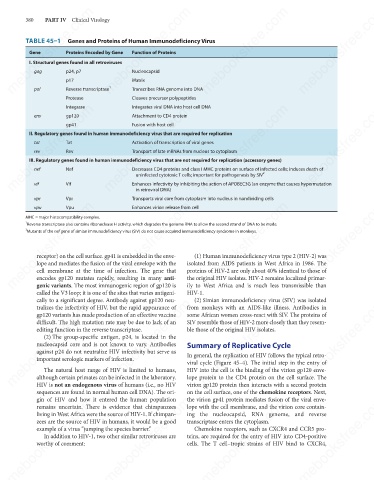
                 TABLE 45–1  Genes and Proteins of Human Immunodeficiency Virus
                                                   Function of Proteins
                  Gene
                              Proteins Encoded by Gene
                  I. Structural genes found in all retroviruses
                    gag
                                                   Nucleocapsid
                              p24, p7
                              Reverse transcriptase
                                                   Transcribes RNA genome into DNA
                                                   Cleaves precursor polypeptides
                              Protease
                        pol   p17           1      Matrix
 mebooksfree.com  mebooksfree.com           mebooksfree.com                 mebooksfree.com                 mebooksfree.com                mebooksfree.com
                                                   Integrates viral DNA into host cell DNA
                              Integrase

                                                   Attachment to CD4 protein
                    env
                              gp120
                              gp41
                                                   Fusion with host cell

                  II. Regulatory genes found in human immunodeficiency virus that are required for replication
                              Tat
                    tat
                                                   Activation of transcription of viral genes
                    rev
                                                   Transport of late mRNAs from nucleus to cytoplasm
                              Rev
                  III. Regulatory genes found in human immunodeficiency virus that are not required for replication (accessory genes)
                              Nef
                                                   Decreases CD4 proteins and class I MHC proteins on surface of infected cells; induces death of
                    nef
                                                                                              2
                                                     uninfected cytotoxic T cells; important for pathogenesis by SIV
                    vif
                                                     in retroviral DNA)
                                                   Transports viral core from cytoplasm into nucleus in nondividing cells
                              Vpr
                    vpr       Vif                  Enhances infectivity by inhibiting the action of APOBEC3G (an enzyme that causes hypermutation
                                                                            mebooksfree.com
 mebooksfree.com  mebooksfree.com           mebooksfree.com          isolated from AIDS patients in West Africa in 1986. The               mebooksfree.com
                                                                                                            mebooksfree.com
                                                   Enhances virion release from cell
                              Vpu
                    vpu
                 MHC = major histocompatibility complex.
                 1
                 Reverse transcriptase also contains ribonuclease H activity, which degrades the genome RNA to allow the second strand of DNA to be made.
                 2
                 Mutants of the nef gene of simian immunodeficiency virus (SIV) do not cause acquired immunodeficiency syndrome in monkeys.
                    receptor) on the cell surface. gp41 is embedded in the enve-
                                                                        (1) Human immunodeficiency virus type 2 (HIV-2) was
                    lope and mediates the fusion of the viral envelope with the
                    cell membrane at the time of infection. The gene that
                                                                     the original HIV isolates. HIV-2 remains localized primar-
                    encodes gp120 mutates rapidly, resulting in many  anti-
                                                                     ily to West  Africa and is much less transmissible than
                    genic variants. The most immunogenic region of gp120 is
                    called the V3 loop; it is one of the sites that varies antigeni-  proteins of HIV-2 are only about 40% identical to those of
                                                                     HIV-1.
                                                                        (2) Simian immunodeficiency virus (SIV) was isolated
                    cally to a significant degree. Antibody against gp120 neu-
                                                                            mebooksfree.com
                                                                                                            mebooksfree.com
 mebooksfree.com  mebooksfree.com           mebooksfree.com          SIV resemble those of HIV-2 more closely than they resem-             mebooksfree.com
                                                                     from  monkeys  with  an  AIDS-like  illness.  Antibodies  in
                    tralizes the infectivity of HIV, but the rapid appearance of
                                                                     some African women cross-react with SIV. The proteins of
                    gp120 variants has made production of an effective vaccine
                    difficult. The high mutation rate may be due to lack of an
                                                                     ble those of the original HIV isolates.
                    editing function in the reverse transcriptase.
                       (2) The group-specific antigen, p24, is located in the
                                                                     Summary of Replicative Cycle
                    nucleocapsid core and is not known to vary. Antibodies
                    against p24 do not neutralize HIV infectivity but serve as
                                                                     In general, the replication of HIV follows the typical retro-
                    important serologic markers of infection.
                                                                     viral cycle (Figure 45–4). The initial step in the entry of
                       The natural host range of HIV is limited to humans,
                                                                     lope protein to the CD4 protein on the cell surface. The
                    although certain primates can be infected in the laboratory.
                                                                     virion gp120 protein then interacts with a second protein
                    HIV is not an endogenous virus of humans (i.e., no HIV
                    sequences are found in normal human cell DNA). The ori-  HIV into the cell is the binding of the virion gp120 enve-
                                                                     on the cell surface, one of the chemokine receptors. Next,
 mebooksfree.com  mebooksfree.com           mebooksfree.com          transcriptase enters the cytoplasm.    mebooksfree.com                mebooksfree.com
                                                                            mebooksfree.com
                    gin of HIV and how it entered the human population
                                                                     the virion gp41 protein mediates fusion of the viral enve-
                                                                     lope with the cell membrane, and the virion core contain-
                    remains uncertain. There is evidence that chimpanzees
                                                                     ing the nucleocapsid, RNA genome, and reverse
                    living in West Africa were the source of HIV-1. If chimpan-
                    zees are the source of HIV in humans, it would be a good
                                                                        Chemokine receptors, such as CXCR4 and CCR5 pro-
                    example of a virus “jumping the species barrier.”
                                                                     teins, are required for the entry of HIV into CD4-positive
                       In addition to HIV-1, two other similar retroviruses are
                                                                     cells. The T cell–tropic strains of HIV bind to CXCR4,
                    worthy of comment:
 mebooksfree.com  mebooksfree.com           mebooksfree.com                 mebooksfree.com                 mebooksfree.com                mebooksfree.com

