


Page 137 - Textbook of Pathology, 6th Edition
P. 137
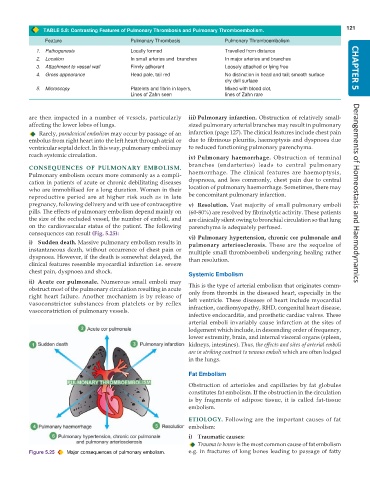
TABLE 5.8: Contrasting Features of Pulmonary Thrombosis and Pulmonary Thromboembolism. 121
Feature Pulmonary Thrombosis Pulmonary Thromboembolism
1. Pathogenesis Locally formed Travelled from distance
2. Location In small arteries and branches In major arteries and branches
3. Attachment to vessel wall Firmly adherent Loosely attached or lying free CHAPTER 5
4. Gross appearance Head pale, tail red No distinction in head and tail; smooth surface
dry dull surface
5. Microscopy Platelets and fibrin in layers, Mixed with blood clot,
Lines of Zahn seen lines of Zahn rare
are then impacted in a number of vessels, particularly iii) Pulmonary infarction. Obstruction of relatively small-
affecting the lower lobes of lungs. sized pulmonary arterial branches may result in pulmonary
Rarely, paradoxical embolism may occur by passage of an infarction (page 127). The clinical features include chest pain
embolus from right heart into the left heart through atrial or due to fibrinous pleuritis, haemoptysis and dyspnoea due
ventricular septal defect. In this way, pulmonary emboli may to reduced functioning pulmonary parenchyma.
reach systemic circulation. iv) Pulmonary haemorrhage. Obstruction of terminal
branches (endarteries) leads to central pulmonary
CONSEQUENCES OF PULMONARY EMBOLISM.
Pulmonary embolism occurs more commonly as a compli- haemorrhage. The clinical features are haemoptysis,
cation in patients of acute or chronic debilitating diseases dyspnoea, and less commonly, chest pain due to central
who are immobilised for a long duration. Women in their location of pulmonary haemorrhage. Sometimes, there may
reproductive period are at higher risk such as in late be concomitant pulmonary infarction. Derangements of Homeostasis and Haemodynamics
pregnancy, following delivery and with use of contraceptive v) Resolution. Vast majority of small pulmonary emboli
pills. The effects of pulmonary embolism depend mainly on (60-80%) are resolved by fibrinolytic activity. These patients
the size of the occluded vessel, the number of emboli, and are clinically silent owing to bronchial circulation so that lung
on the cardiovascular status of the patient. The following parenchyma is adequately perfused.
consequences can result (Fig. 5.25):
vi) Pulmonary hypertension, chronic cor pulmonale and
i) Sudden death. Massive pulmonary embolism results in pulmonary arteriosclerosis. These are the sequelae of
instantaneous death, without occurrence of chest pain or multiple small thromboemboli undergoing healing rather
dyspnoea. However, if the death is somewhat delayed, the than resolution.
clinical features resemble myocardial infarction i.e. severe
chest pain, dyspnoea and shock.
Systemic Embolism
ii) Acute cor pulmonale. Numerous small emboli may This is the type of arterial embolism that originates comm-
obstruct most of the pulmonary circulation resulting in acute only from thrombi in the diseased heart, especially in the
right heart failure. Another mechanism is by release of left ventricle. These diseases of heart include myocardial
vasoconstrictor substances from platelets or by reflex
vasoconstriction of pulmonary vessels. infraction, cardiomyopathy, RHD, congenital heart disease,
infective endocarditis, and prosthetic cardiac valves. These
arterial emboli invariably cause infarction at the sites of
lodgement which include, in descending order of frequency,
lower extremity, brain, and internal visceral organs (spleen,
kidneys, intestines). Thus, the effects and sites of arterial emboli
are in striking contrast to venous emboli which are often lodged
in the lungs.
Fat Embolism
Obstruction of arterioles and capillaries by fat globules
constitutes fat embolism. If the obstruction in the circulation
is by fragments of adipose tissue, it is called fat-tissue
embolism.
ETIOLOGY. Following are the important causes of fat
embolism:
i) Traumatic causes:
Trauma to bones is the most common cause of fat embolism
Figure 5.25 Major consequences of pulmonary embolism. e.g. in fractures of long bones leading to passage of fatty

