


Page 196 - Textbook of Pathology, 6th Edition
P. 196
180                                                      streptococcal complications such as RHD and acute
                                                               glomerulonephritis.
                                                               3. Group C and G streptococci are responsible for respiratory
                                                               infections.
                                                               4. Group D or Streptococcus faecalis, also called enterococci
                                                               are important in causation of urinary tract infection, bacterial
                                                               endocarditis, septicaemia etc.
                                                               5. Untypable α-haemolytic streptococci such as Streptococcus
                                                               viridans constitute the normal flora of the mouth and may
     SECTION I
                                                               cause bacterial endocarditis.
                                                               6. Pneumococci or Streptococcus pneumoniae are etiologic
                                                               agents for bacterial pneumonias, meningitis and septicaemia.

                                                               CLOSTRIDIAL DISEASES
                                                               Clostridia are gram-positive spore-forming anaerobic
                                                               microorganisms found in the gastrointestinal tract of
                                                               herbivorous animals and man. These organisms may
                                                               undergo vegetative division under anaerobic conditions, and
                                                               sporulation under aerobic conditions. These spores are
                                                               passed in faeces and can survive in unfavourable conditions.
                                                               On degeneration of these microorganisms, the plasmids are
                                                               liberated which produce many toxins responsible for the
                                                               following clostridial diseases depending upon the species
                                                               (Fig. 7.6):
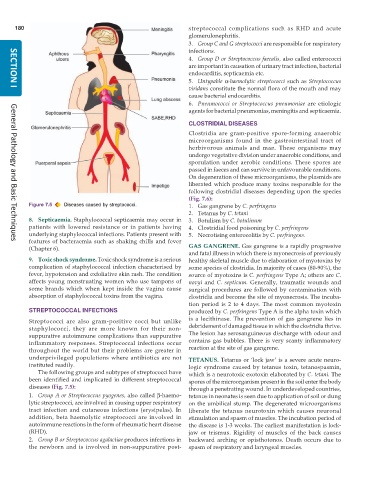
           Figure 7.5  Diseases caused by streptococci.        1. Gas gangrene by C. perfringens
                                                               2. Tetanus by C. tetani
           8. Septicaemia. Staphylococcal septicaemia may occur in  3. Botulism by C. botulinum
           patients with lowered resistance or in patients having  4. Clostridial food poisoning by C. perfringens
           underlying staphylococcal infections. Patients present with  5. Necrotising enterocolitis by C. perfringens.
           features of bacteraemia such as shaking chills and fever
     General Pathology and Basic Techniques
           (Chapter 6).                                        GAS GANGRENE. Gas gangrene is a rapidly progressive
                                                               and fatal illness in which there is myonecrosis of previously
           9. Toxic shock syndrome. Toxic shock syndrome is a serious  healthy skeletal muscle due to elaboration of myotoxins by
           complication of staphylococcal infection characterised by  some species of clostridia. In majority of cases (80-90%), the
           fever, hypotension and exfoliative skin rash. The condition  source of myotoxins is C. perfringens Type A; others are C.
           affects young menstruating women who use tampons of  novyi and C. septicum. Generally, traumatic wounds and
           some brands which when kept inside the vagina cause  surgical procedures are followed by contamination with
           absorption of staphylococcal toxins from the vagina.  clostridia and become the site of myonecrosis. The incuba-
                                                               tion period is 2 to 4 days. The most common myotoxin
           STREPTOCOCCAL INFECTIONS                            produced by C. perfringens Type A is the alpha toxin which

           Streptococci are also gram-positive cocci but unlike  is a lecithinase. The prevention of gas gangrene lies in
           staphylococci, they are more known for their non-   debridement of damaged tissue in which the clostridia thrive.
           suppurative autoimmune complications than suppurative  The lesion has serosanguineous discharge with odour and
           inflammatory responses. Streptococcal infections occur  contains gas bubbles. There is very scanty inflammatory
           throughout the world but their problems are greater in  reaction at the site of gas gangrene.
           underprivileged populations where antibiotics are not  TETANUS. Tetanus or ‘lock jaw’ is a severe acute neuro-
           instituted readily.                                 logic syndrome caused by tetanus toxin, tetanospasmin,
              The following groups and subtypes of streptococci have  which is a neurotoxic exotoxin elaborated by C. tetani. The
           been identified and implicated in different streptococcal  spores of the microorganism present in the soil enter the body
           diseases (Fig. 7.5):                                through a penetrating wound. In underdeveloped countries,
           1. Group A or Streptococcus pyogenes, also called β-haemo-  tetanus in neonates is seen due to application of soil or dung
           lytic streptococci, are involved in causing upper respiratory  on the umbilical stump. The degenerated microorganisms
           tract infection and cutaneous infections (erysipelas). In  liberate the tetanus neurotoxin which causes neuronal
           addition, beta haemolytic streptococci are involved in  stimulation and spasm of muscles. The incubation period of
           autoimmune reactions in the form of rheumatic heart disease  the disease is 1-3 weeks. The earliest manifestation is lock-
           (RHD).                                              jaw or trismus. Rigidity of muscles of the back causes
           2. Group B or Streptococcus agalactiae produces infections in  backward arching or opisthotonos. Death occurs due to
           the newborn and is involved in non-suppurative post-  spasm of respiratory and laryngeal muscles.

