


Page 225 - Textbook of Pathology, 6th Edition
P. 225
In cancer,  the transformed cells are produced by  209
                                                               abnormal cell growth due to genetic damage to these normal
                                                               controlling genes. Thus, corresponding abnormalities in these
                                                               4 cell regulatory genes are as under:
                                                               i) Activation of growth-promoting oncogenes causing
                                                               transformation of cell (mutant form of normal proto-
                                                               oncogene in cancer is termed oncogene). Many of these cancer  CHAPTER 8
                                                               associated genes, oncogenes, were first discovered in viruses,
                                                               and hence named as v-onc. Gene products of oncogenes are
                                                               called oncoproteins. Oncogenes are considered dominant since
                                                               they appear in spite of presence of normal proto-oncogenes.
                                                               ii) Inactivation of cancer-suppressor genes (i.e. inactivation of
                                                               anti-oncogenes) permitting the cellular proliferation of
                                                               transformed cells. Anti-oncogenes are active in recessive form  Neoplasia
                                                               i.e. they are active only if both alleles are damaged.
                                                               iii) Abnormal apoptosis regulatory genes which may act as
                                                               oncogenes or anti-oncogenes. Accordingly, these genes may
                                                               be active in dominant or recessive form.
                                                               iv) Failure of DNA repair genes and thus inability to repair the
                                                               DNA damage resulting in mutations.

                                                               Cancer-related Genes and Cell Growth
                                                               (Hallmarks of Cancer)

                                                               It is apparent from the above discussion that genes control
                                                               the normal cellular growth, while in cancer these controlling
                                                               genes are altered, typically by mutations. A large number of
                                                               such cancer-associated genes have been described, each with
                                                               a specific function in cell growth. Some of these genes are
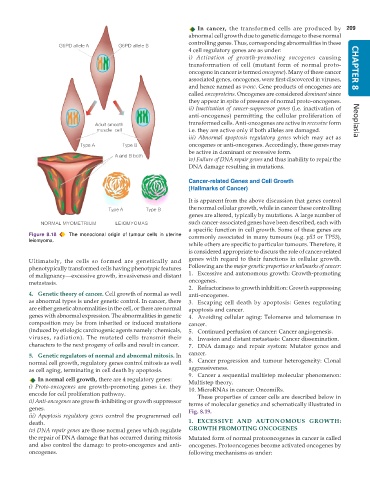
           Figure 8.18  The monoclonal origin of tumour cells in uterine  commonly associated in many tumours (e.g. p53 or TP53),
           leiomyoma.
                                                               while others are specific to particular tumours. Therefore, it
                                                               is considered appropriate to discuss the role of cancer-related
           Ultimately, the cells so formed are genetically and  genes with regard to their functions in cellular growth.
           phenotypically transformed cells having phenotypic features  Following are the major genetic properties or hallmarks of cancer:
           of malignancy—excessive growth, invasiveness and distant  1. Excessive and autonomous growth: Growth-promoting
           metastasis.                                         oncogenes.
                                                               2. Refractoriness to growth inhibition: Growth suppressing
           4. Genetic theory of cancer. Cell growth of normal as well  anti-oncogenes.
           as abnormal types is under genetic control. In cancer, there  3. Escaping cell death by apoptosis: Genes regulating
           are either genetic abnormalities in the cell, or there are normal  apoptosis and cancer.
           genes with abnormal expression. The abnormalities in genetic  4. Avoiding cellular aging: Telomeres and telomerase in
           composition may be from inherited or induced mutations  cancer.
           (induced by etiologic carcinogenic agents namely: chemicals,  5. Continued perfusion of cancer: Cancer angiogenesis.
           viruses, radiation). The mutated cells transmit their  6. Invasion and distant metastasis: Cancer dissemination.
           characters to the next progeny of cells and result in cancer.  7. DNA damage and repair system: Mutator genes and

           5. Genetic regulators of normal and abnormal mitosis. In  cancer.
           normal cell growth, regulatory genes control mitosis as well  8. Cancer progression and tumour heterogeneity: Clonal
           as cell aging, terminating in cell death by apoptosis.  aggressiveness.
                                                               9. Cancer a sequential multistep molecular phenomenon:
              In normal cell growth, there are 4 regulatory genes:  Multistep theory.
           i) Proto-oncogenes are growth-promoting genes i.e. they  10. MicroRNAs in cancer: OncomiRs.
           encode for cell proliferation pathway.                 These properties of cancer cells are described below in
           ii) Anti-oncogenes are growth-inhibiting or growth suppressor  terms of molecular genetics and schematically illustrated in
           genes.                                              Fig. 8.19.
           iii) Apoptosis regulatory genes control the programmed cell
           death.                                              1. EXCESSIVE AND AUTONOMOUS GROWTH:
           iv) DNA repair genes are those normal genes which regulate  GROWTH PROMOTING ONCOGENES
           the repair of DNA damage that has occurred during mitosis  Mutated form of normal protooncogenes in cancer is called
           and also control the damage to proto-oncogenes and anti-  oncogenes. Protooncogenes become activated oncogenes by
           oncogenes.                                          following mechanisms as under:

