


Page 239 - Textbook of Pathology, 6th Edition
P. 239
223  Neoplasia


                                                                                                                      CHAPTER 8


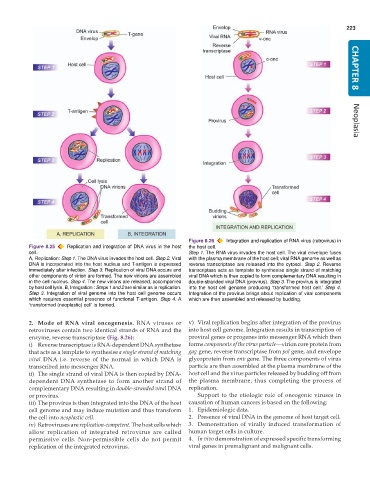
                                                               Figure 8.26  Integration and replication of RNA virus (retrovirus) in
           Figure 8.25  Replication and integration of DNA virus in the host  the host cell.
           cell.                                               Step 1. The RNA virus invades the host cell. The viral envelope fuses
           A, Replication: Step 1. The DNA virus invades the host cell. Step 2. Viral  with the plasma membrane of the host cell; viral RNA genome as well as
           DNA is incorporated into the host nucleus and T-antigen is expressed  reverse transcriptase are released into the cytosol. Step 2. Reverse
           immediately after infection. Step 3. Replication of viral DNA occurs and  transcriptase acts as template to synthesise single strand of matching
           other components of virion are formed. The new virions are assembled  viral DNA which is then copied to form complementary DNA resulting in
           in the cell nucleus. Step 4. The new virions are released, accompanied  double-stranded viral DNA (provirus). Step 3. The provirus is integrated
           by host cell lysis. B, Integration : Steps 1 and 2 are similar as in replication.  into the host cell genome producing ‘transformed host cell.’ Step 4.
           Step 3. Integration of viral genome into the host cell genome occurs  Integration of the provirus brings about replication of viral components
           which requires essential presence of functional T-antigen. Step 4. A  which are then assembled and released by budding.
           ‘transformed (neoplastic) cell’ is formed.


           2. Mode of RNA viral oncogenesis. RNA viruses or    v) Viral replication begins after integration of the provirus
           retroviruses contain two identical strands of RNA and the  into host cell genome. Integration results in transcription of
           enzyme, reverse transcriptase (Fig. 8.26):          proviral genes or progenes into messenger RNA which then
           i) Reverse transcriptase is RNA-dependent DNA synthetase  forms components of the virus particle—virion core protein from
           that acts as a template to synthesise a single strand of matching  gag gene, reverse transcriptase from pol gene, and envelope
           viral DNA i.e. reverse of the normal in which DNA is  glycoprotein from env gene. The three components of virus
           transcribed into messenger RNA.                     particle are then assembled at the plasma membrane of the
           ii) The single strand of viral DNA is then copied by DNA-  host cell and the virus particles released by budding off from
           dependent DNA synthetase to form another strand of  the plasma membrane, thus completing the process of
           complementary DNA resulting in double-stranded viral DNA  replication.
           or provirus.                                           Support to the etiologic role of oncogenic viruses in
           iii) The provirus is then integrated into the DNA of the host  causation of human cancers is based on the following:
           cell genome and may induce mutation and thus transform  1. Epidemiologic data.
           the cell into neoplastic cell.                      2. Presence of viral DNA in the genome of host target cell.
           iv) Retroviruses are replication-competent. The host cells which  3. Demonstration of virally induced transformation of
           allow replication of integrated retrovirus are called  human target cells in culture.
           permissive cells. Non-permissible cells do not permit  4. In vivo demonstration of expressed specific transforming
           replication of the integrated retrovirus.           viral genes in premalignant and malignant cells.

