


Page 254 - Textbook of Pathology, 6th Edition
P. 254
238                                                         Environmental chemicals e.g. long-term or accidental
                                                               exposure to certain man-made or naturally-occurring
                                                               chemicals.

                                                               THERAPEUTIC (IATROGENIC) DRUG INJURY
                                                               Though the basis of patient management is rational drug
                                                               therapy, nevertheless adverse drug reactions do occur in 2-
                                                               5% of patients. In general, the risk of adverse drug reaction
                                                               increases with increasing number of drugs administered.
     SECTION I
                                                               Adverse effects of drugs may appear due to:
                                                                  overdose;
                                                                  genetic predisposition;
                                                                  exaggerated pharmacologic response;
                                                                  interaction with other drugs; and
                                                                  unknown factors.
                                                                  It is beyond the scope of this book to delve into the list of
                                                               drugs with their harmful effects. However, some of the
                                                               common forms of iatrogenic drug injury and the offending
                                                               drugs are listed in Table 9.2.


                                                               NON-THERAPEUTIC TOXIC AGENTS
                                                               ALCOHOLISM

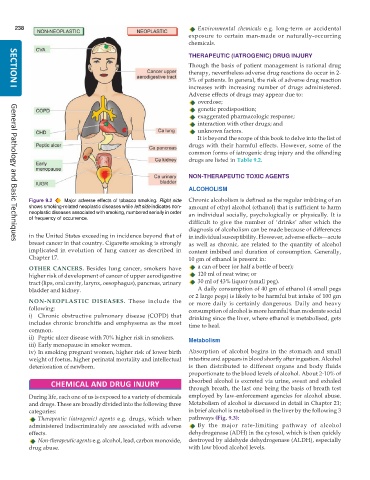
           Figure 9.2  Major adverse effects of tobacco smoking. Right side  Chronic alcoholism is defined as the regular imbibing of an
           shows smoking-related neoplastic diseases while left side indicates non-  amount of ethyl alcohol (ethanol) that is sufficient to harm
           neoplastic diseases associated with smoking, numbered serially in order  an individual socially, psychologically or physically. It is
           of frequency of occurrence.
                                                               difficult to give the number of ‘drinks’ after which the
                                                               diagnosis of alcoholism can be made because of differences
           in the United States exceeding in incidence beyond that of  in individual susceptibility. However, adverse effects—acute
           breast cancer in that country. Cigarette smoking is strongly  as well as chronic, are related to the quantity of alcohol
     General Pathology and Basic Techniques
           implicated in evolution of lung cancer as described in  content imbibed and duration of consumption. Generally,
           Chapter 17.                                         10 gm of ethanol is present in:

           OTHER CANCERS.  Besides lung cancer, smokers have      a can of beer (or half a bottle of beer);
           higher risk of development of cancer of upper aerodigestive  120 ml of neat wine; or
           tract (lips, oral cavity, larynx, oesophagus), pancreas, urinary  30 ml of 43% liquor (small peg).
           bladder and kidney.                                    A daily consumption of 40 gm of ethanol (4 small pegs
                                                               or 2 large pegs) is likely to be harmful but intake of 100 gm
           NON-NEOPLASTIC DISEASES.  These include the         or more daily is certainly dangerous. Daily and heavy
           following:                                          consumption of alcohol is more harmful than moderate social
           i) Chronic obstructive pulmonary disease (COPD) that  drinking since the liver, where ethanol is metabolised, gets
           includes chronic bronchitis and emphysema as the most  time to heal.
           common.
           ii) Peptic ulcer disease with 70% higher risk in smokers.
           iii) Early menopause in smoker women.               Metabolism
           iv) In smoking pregnant women, higher risk of lower birth  Absorption of alcohol begins in the stomach and small
           weight of foetus, higher perinatal mortality and intellectual  intestine and appears in blood shortly after ingestion. Alcohol
           deterioration of newborn.                           is then distributed to different organs and body fluids
                                                               proportionate to the blood levels of alcohol. About 2-10% of
                                                               absorbed alcohol is excreted via urine, sweat and exhaled
                  CHEMICAL AND DRUG INJURY
                                                               through breath, the last one being the basis of breath test
           During life, each one of us is exposed to a variety of chemicals  employed by law-enforcement agencies for alcohol abuse.
           and drugs. These are broadly divided into the following three  Metabolism of alcohol is discussed in detail in Chapter 21;
           categories:                                         in brief alcohol is metabolised in the liver by the following 3
              Therapeutic (iatrogenic) agents e.g. drugs, which when  pathways (Fig. 9.3):
           administered indiscriminately are associated with adverse  By the major rate-limiting pathway of alcohol
           effects.                                            dehydrogenase (ADH) in the cytosol, which is then quickly
              Non-therapeutic agents e.g. alcohol, lead, carbon monoxide,  destroyed by aldehyde dehydrogenase (ALDH), especially
           drug abuse.                                         with low blood alcohol levels.

