


Page 257 - Textbook of Pathology, 6th Edition
P. 257
burning of fossil fuel in industries or at home; and  241
                                                                  tobacco smoke.
                                                                  CO is an important cause of accidental death due to
                                                               systemic oxygen deprivation of tissues. This is because
                                                               haemoglobin has about 200-times higher affinity for CO than
                                                               for O  and thus varying amount of carboxyhaemoglobin is  CHAPTER 9
                                                                    2
                                                               formed depending upon the extent of CO poisoning. Besides,
                                                               carboxyhaemoglobin interferes with the release of O  from
                                                                                                            2
                                                               oxyhaemoglobin causing further aggravation of tissue
                                                               hypoxia. Diagnosis of CO poisoning is, therefore, best
                                                               confirmed by carboxyhaemoglobin levels in the blood.
                                                                  CO poisoning may present in 2 ways:
                                                                  Acute CO poisoning in which there is sudden
                                                               development of brain hypoxia characterised by oedema and
                                                               petechial haemorrhages.
                                                                  Chronic CO poisoning presents with nonspecific changes
                                                               of slowly developing hypoxia of the brain.


                                                               DRUG ABUSE                                             Environmental and Nutritional Diseases
                                                               Drug abuse is defined as the use of certain drugs for the
                                                               purpose of ‘mood alteration’ or ‘euphoria’ or ‘kick’ but
                                                               subsequently leading to habit-forming, dependence and
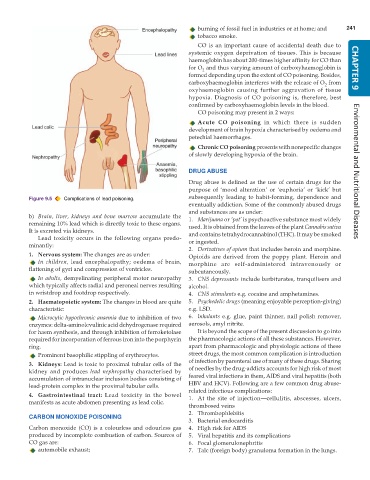
           Figure 9.5  Complications of lead poisoning.
                                                               eventually addiction. Some of the commonly abused drugs
                                                               and substances are as under:
           b) Brain, liver, kidneys and bone marrow accumulate the  1. Marijuana or ‘pot’ is psychoactive substance most widely
           remaining 10% lead which is directly toxic to these organs.
           It is excreted via kidneys.                         used. It is obtained from the leaves of the plant Cannabis sativa
                                                               and contains tetrahydrocannabinol (THC). It may be smoked
              Lead toxicity occurs in the following organs predo-
           minantly:                                           or ingested.
                                                               2. Derivatives of opium that includes heroin and morphine.
           1. Nervous system: The changes are as under:        Opioids are derived from the poppy plant. Heroin and
              In children, lead encephalopathy; oedema of brain,  morphine are self-administered intravenously or
           flattening of gyri and compression of ventricles.   subcutaneously.
              In adults, demyelinating peripheral motor neuropathy  3. CNS depressants include barbiturates, tranquilisers and
           which typically affects radial and peroneal nerves resulting  alcohol.
           in wristdrop and footdrop respectively.             4. CNS stimulants e.g. cocaine and amphetamines.
           2. Haematopoietic system: The changes in blood are quite  5. Psychedelic drugs (meaning enjoyable perception-giving)
           characteristic:                                     e.g. LSD.
              Microcytic hypochromic anaemia due to inhibition of two  6. lnhalants e.g. glue, paint thinner, nail polish remover,
           enzymes: delta-aminolevulinic acid dehydrogenase required  aerosols, amyl nitrite.
           for haem synthesis, and through inhibition of ferroketolase  It is beyond the scope of the present discussion to go into
           required for incorporation of ferrous iron into the porphyrin  the pharmacologic actions of all these substances. However,
           ring.                                               apart from pharmacologic and physiologic actions of these
              Prominent basophilic stippling of erythrocytes.  street drugs, the most common complication is introduction
                                                               of infection by parenteral use of many of these drugs. Sharing
           3. Kidneys: Lead is toxic to proximal tubular cells of the
           kidney and produces  lead nephropathy characterised by  of needles by the drug-addicts accounts for high risk of most
           accumulation of intranuclear inclusion bodies consisting of  feared viral infections in them, AIDS and viral hepatitis (both
           lead-protein complex in the proximal tubular cells.  HBV and HCV). Following are a few common drug abuse-
                                                               related infectious complications:
           4. Gastrointestinal tract: Lead toxicity in the bowel  1. At the site of injection—cellulitis, abscesses, ulcers,
           manifests as acute abdomen presenting as lead colic.
                                                               thrombosed veins
                                                               2. Thrombophlebitis
           CARBON MONOXIDE POISONING
                                                               3. Bacterial endocarditis
           Carbon monoxide (CO) is a colourless and odourless gas  4. High risk for AIDS
           produced by incomplete combustion of carbon. Sources of  5. Viral hepatitis and its complications
           CO gas are:                                         6. Focal glomerulonephritis
              automobile exhaust;                              7. Talc (foreign body) granuloma formation in the lungs.

