


Page 256 - Textbook of Pathology, 6th Edition
P. 256
240


     SECTION I


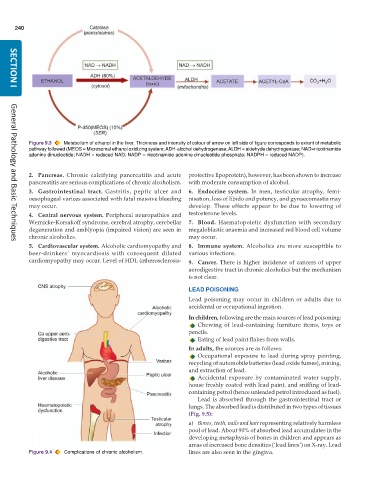
           Figure 9.3  Metabolism of ethanol in the liver. Thickness and intensity of colour of arrow on left side of figure corresponds to extent of metabolic
           pathway followed (MEOS = Microsomal ethanol oxidizing system; ADH-alcohol dehydrogenase; ALDH = aldehyde dehydrogenase; NAD=nicotinamide
           adenine dinucleotide; NADH = reduced NAD; NADP = nicotinamide adenine dinucleotide phosphate; NADPH = reduced NADP).

           2. Pancreas. Chronic calcifying pancreatitis and acute  protective lipoprotein), however, has been shown to increase
           pancreatitis are serious complications of chronic alcoholism.  with moderate consumption of alcohol.
           3. Gastrointestinal tract. Gastritis, peptic ulcer and  6. Endocrine system. In men, testicular atrophy, femi-
           oesophageal varices associated with fatal massive bleeding  nisation, loss of libido and potency, and gynaecomastia may
           may occur.                                          develop. These effects appear to be due to lowering of
           4. Central nervous system. Peripheral neuropathies and  testosterone levels.
           Wernicke-Korsakoff syndrome, cerebral atrophy, cerebellar  7. Blood. Haematopoietic dysfunction with secondary
           degeneration and amblyopia (impaired vision) are seen in  megaloblastic anaemia and increased red blood cell volume
           chronic alcoholics.                                 may occur.
     General Pathology and Basic Techniques
           5. Cardiovascular system. Alcoholic cardiomyopathy and  8. Immune system. Alcoholics are more susceptible to
           beer-drinkers’ myocardiosis with consequent dilated  various infections.
           cardiomyopathy may occur. Level of HDL (atherosclerosis-  9. Cancer. There is higher incidence of cancers of upper
                                                               aerodigestive tract in chronic alcoholics but the mechanism
                                                               is not clear.

                                                               LEAD POISONING
                                                               Lead poisoning may occur in children or adults due to
                                                               accidental or occupational ingestion.

                                                               In children, following are the main sources of lead poisoning:
                                                                  Chewing of lead-containing furniture items, toys or
                                                               pencils.
                                                                  Eating of lead paint flakes from walls.
                                                               In adults, the sources are as follows:
                                                                  Occupational exposure to lead during spray painting,
                                                               recycling of automobile batteries (lead oxide fumes), mining,
                                                               and extraction of lead.
                                                                  Accidental exposure by contaminated water supply,
                                                               house freshly coated with lead paint, and sniffing of lead-
                                                               containing petrol (hence unleaded petrol introduced as fuel).
                                                                  Lead is absorbed through the gastrointestinal tract or
                                                               lungs. The absorbed lead is distributed in two types of tissues
                                                               (Fig. 9.5):
                                                               a) Bones, teeth, nails and hair representing relatively harmless
                                                               pool of lead. About 90% of absorbed lead accumulates in the
                                                               developing metaphysis of bones in children and appears as
                                                               areas of increased bone densities (‘lead lines’) on X-ray. Lead
           Figure 9.4  Complications of chronic alcoholism.    lines are also seen in the gingiva.

