


Page 483 - Textbook of Pathology, 6th Edition
P. 483
467


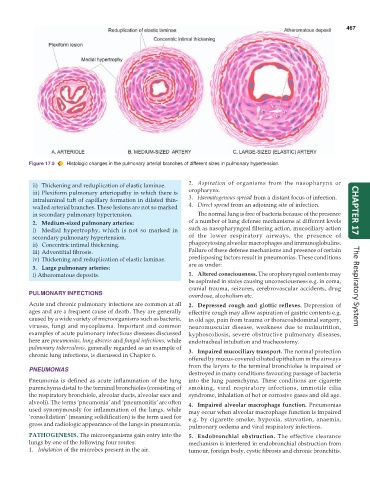
           Figure 17.5  Histologic changes in the pulmonary arterial branches of different sizes in pulmonary hypertension.


            ii) Thickening and reduplication of elastic laminae.  2. Aspiration of organisms from the nasopharynx or
            iii) Plexiform pulmonary arteriopathy in which there is  oropharynx.
            intraluminal tuft of capillary formation in dilated thin-  3. Haematogenous spread from a distant focus of infection.
            walled arterial branches. These lesions are not so marked  4. Direct spread from an adjoining site of infection.
            in secondary pulmonary hypertension.                  The normal lung is free of bacteria because of the presence  CHAPTER 17
            2. Medium-sized pulmonary arteries:                of a number of lung defense mechanisms at different levels
            i) Medial hypertrophy, which is not so marked in   such as nasopharyngeal filtering action, mucociliary action
            secondary pulmonary hypertension.                  of the lower respiratory airways, the presence of
            ii) Concentric intimal thickening.                 phagocytosing alveolar macrophages and immunoglobulins.
            iii) Adventitial fibrosis.                         Failure of these defense mechanisms and presence of certain
            iv) Thickening and reduplication of elastic laminae.  predisposing factors result in pneumonias. These conditions
            3. Large pulmonary arteries:                       are as under:
            i) Atheromatous deposits.                          1. Altered consciousness. The oropharyngeal contents may
                                                               be aspirated in states causing unconsciousness e.g. in coma,
                                                               cranial trauma, seizures, cerebrovascular accidents, drug  The Respiratory System
           PULMONARY INFECTIONS                                overdose, alcoholism etc.
           Acute and chronic pulmonary infections are common at all  2. Depressed cough and glottic reflexes. Depression of
           ages and are a frequent cause of death. They are generally  effective cough may allow aspiration of gastric contents e.g.
           caused by a wide variety of microorganisms such as bacteria,  in old age, pain from trauma or thoracoabdominal surgery,
           viruses, fungi and mycoplasma. Important and common  neuromuscular disease, weakness due to malnutrition,
           examples of acute pulmonary infectious diseases discussed  kyphoscoliosis, severe obstructive pulmonary diseases,
           here are pneumonias, lung abscess and fungal infections, while  endotracheal intubation and tracheostomy.
           pulmonary tuberculosis, generally regarded as an example of  3. Impaired mucociliary transport. The normal protection
           chronic lung infections, is discussed in Chapter 6.
                                                               offered by mucus-covered ciliated epithelium in the airways
                                                               from the larynx to the terminal bronchioles is impaired or
           PNEUMONIAS
                                                               destroyed in many conditions favouring passage of bacteria
           Pneumonia is defined as acute inflammation of the lung  into the lung parenchyma. These conditions are cigarette
           parenchyma distal to the terminal bronchioles (consisting of  smoking, viral respiratory infections, immotile cilia
           the respiratory bronchiole, alveolar ducts, alveolar sacs and  syndrome, inhalation of hot or corrosive gases and old age.
           alveoli). The terms ‘pneumonia’ and ‘pneumonitis’ are often  4. Impaired alveolar macrophage function.  Pneumonias
           used synonymously for inflammation of the lungs, while  may occur when alveolar macrophage function is impaired
           ‘consolidation’ (meaning solidification) is the term used for  e.g. by cigarette smoke, hypoxia, starvation, anaemia,
           gross and radiologic appearance of the lungs in pneumonia.  pulmonary oedema and viral respiratory infections.
           PATHOGENESIS. The microorganisms gain entry into the  5. Endobronchial obstruction. The effective clearance
           lungs by one of the following four routes:          mechanism is interfered in endobronchial obstruction from
           1. Inhalation of the microbes present in the air.   tumour, foreign body, cystic fibrosis and chronic bronchitis.

