


Page 254 - 9780077418427.pdf
P. 254
/Users/user-f465/Desktop
          tiL12214_ch09_229-250.indd Page 231  9/3/10  10:07 PM user-f465
          tiL12214_ch09_229-250.indd Page 231  9/3/10  10:07 PM user-f465                                               /Users/user-f465/Desktop


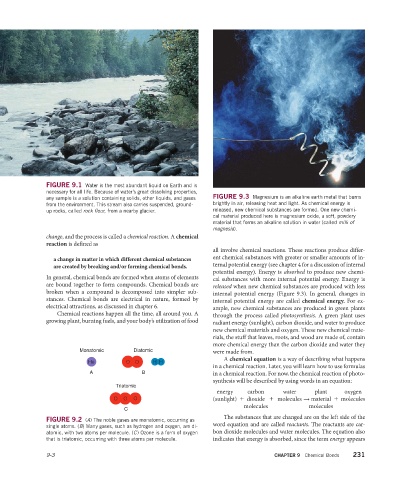
                       FIGURE 9.1  Water is the most abundant liquid on Earth and is
                        necessary for all life. Because of water’s great dissolving properties,
                        any sample is a solution containing solids, other liquids, and gases     FIGURE 9.3  Magnesium is an alkaline earth metal that burns
                        from the environment. This stream also carries suspended, ground-  brightly in air, releasing heat and light. As chemical energy is
                        up rocks, called rock flour, from a nearby glacier.    released, new chemical substances are formed. One new chemi-
                                                                               cal material produced here is magnesium oxide, a soft, powdery
                                                                               material that forms an alkaline solution in water (called milk of
                                                                               magnesia).
                       change, and the process is called a chemical reaction. A chemical
                       reaction is defined as
                                                                               all involve chemical reactions. These reactions produce differ-
                          a change in matter in which different chemical substances   ent chemical substances with greater or smaller amounts of in-
                          are created by breaking and/or forming chemical bonds.  ternal potential energy (see chapter 4 for a discussion of  internal
                                                                               potential energy). Energy is absorbed to produce new chemi-
                       In general, chemical bonds are formed when atoms of elements   cal substances with more internal potential energy. Energy is
                       are bound together to form compounds. Chemical bonds are   released when new chemical substances are produced with less
                       broken when a compound is decomposed into simpler sub-  internal potential energy (Figure 9.3). In general, changes in
                       stances. Chemical bonds are electrical in nature, formed by   internal potential energy are called chemical energy. For ex-
                       electrical attractions, as discussed in chapter 6.      ample, new chemical substances are produced in green plants
                           Chemical reactions happen all the time, all around you. A   through the process called photosynthesis. A green plant uses
                       growing plant, burning fuels, and your body’s utilization of food   radiant energy (sunlight), carbon dioxide, and water to produce
                                                                               new chemical materials and oxygen. These new chemical mate-
                                                                               rials, the stuff that leaves, roots, and wood are made of, contain
                                                                               more chemical energy than the carbon dioxide and water they
                                   Monatomic        Diatomic                   were made from.
                                                                                  A chemical equation is a way of describing what happens
                                     He           O  O     H  H
                                                                               in a chemical reaction. Later, you will learn how to use formulas
                                      A                B                       in a chemical reaction. For now, the chemical reaction of photo-
                                                                               synthesis will be described by using words in an equation:
                                              Triatomic
                                                                                energy    carbon      water      plant     oxygen
                                              O  O  O                          (sunlight)  + dioxide  + molecules → material  + molecules
                                                                                         molecules            molecules
                                                 C
                                                                                  The substances that are changed are on the left side of the
                       FIGURE 9.2  (A) The noble gases are monatomic, occurring as
                        single atoms. (B) Many gases, such as hydrogen and oxygen, are di-  word equation and are called reactants. The reactants are car-
                        atomic, with two atoms per molecule. (C) Ozone is a form of oxygen   bon dioxide molecules and water molecules. The equation also
                        that is triatomic, occurring with three atoms per molecule.  indicates that energy is absorbed, since the term energy appears

                       9-3                                                                         CHAPTER 9  Chemical Bonds   231

