


Page 255 - 9780077418427.pdf
P. 255
/Users/user-f465/Desktop
          tiL12214_ch09_229-250.indd Page 232  9/3/10  10:07 PM user-f465
          tiL12214_ch09_229-250.indd Page 232  9/3/10  10:07 PM user-f465                                               /Users/user-f465/Desktop


                   on the left side. The arrow means yields. The new chemical sub-  explained by the making and breaking of chemical bonds.
                   stances are on the right side of the word equation and are called   Chemical bonds can be  explained in terms of changes in the
                   products. Reading the photosynthesis reaction as a sentence,   electron structures of atoms. Thus, the place to start in seeking
                   you would say, “Carbon dioxide and water use energy to react,   understanding about chemical reactions is the electron struc-
                   yielding plant materials and oxygen.”                  ture of the atoms themselves.
                      The plant materials produced by the reaction have more in-
                   ternal potential energy, also known as chemical energy, than the
                   reactants. You know this from the equation because the term   9.2  VALENCE ELECTRONS AND IONS
                   energy appears on the left side but not the right. This means that
                   the energy on the left went into internal potential energy on the   As discussed in chapter 8, it is the number of electrons in the
                   right. You also know this because the reaction can be reversed   outermost orbital that usually determines the chemical prop-
                   to release the stored energy (Figure 9.4). When plant materials   erties of an atom. These outer electrons are called  valence
                   (such as wood) are burned, the materials react with oxygen, and   electrons, and it is the valence electrons that participate in
                   chemical energy is released in the form of radiant energy (light)   chemical bonding. The inner electrons are in stable, fully oc-
                   and high kinetic energy of the newly formed gases and vapors.   cupied orbitals and do not participate in chemical bonds. The
                   In words,                                              representative elements (the A-group families) have valence
                                                                          electrons in the outer most orbitals, which contain from one
                    plant      oxygen      carbon      water
                                                                          to eight valence electrons. Recall that you can easily find the
                    material  + molecules → dioxide  + molecules  + energy
                                                                          number of valence electrons by referring to a periodic table.
                    molecules            molecules
                                                                          The number at the top of each representative family is the
                      If you compare the two equations, you will see that burn-  same as the number of outer orbital electrons (with the excep-
                   ing is the opposite of the process of photosynthesis! The en-  tion of helium).
                   ergy  released in burning is exactly the same amount of solar      The noble gases have filled outer orbitals and do not
                   energy that was stored as internal potential energy by the plant.     normally form compounds. Apparently, half-filled and filled
                   Such chemical changes, in which chemical energy is stored in   orbitals are particularly stable arrangements. Atoms have a
                   one reaction and released by another reaction, are the result   tendency to seek such a stable, filled outer orbital arrangement
                   of the making, then the breaking, of chemical bonds. Chemi-  such as the one found in the noble gases. For the representa-
                   cal bonds were formed by utilizing energy to produce new   tive elements, this tendency is called the octet rule. The octet
                   chemical  substances. Energy was released when these bonds   rule states that atoms attempt to acquire an outer orbital with
                   were broken, then reformed to produce the original substances.   eight electrons through chemical reactions. This rule is a gen-
                   In this example, chemical reactions and energy flow can be   eralization, and a few elements do not meet the requirement of
                                                                          eight electrons but do seek the same general trend of stability.
                                                                          There are a few other exceptions, and the octet rule should be
                                                                          considered a generalization that helps keep track of the valence
                                                                          electrons in most representative elements.
                                                                             The family number of the representative element in the
                          +           +                    +
                                                                          periodic table tells you the number of valence electrons and
                                                                          what the atom must do to reach the stability suggested by the
                   Water      Carbon      Solar     Green      Oxygen
                   (H 2 O)    dioxide    energy      plant      (O 2 )    octet rule. For example, consider sodium (Na). Sodium is in
                               (CO 2 )                                    family IA, so it has one valence electron. If the sodium atom
                                                                          can get rid of this outer valence electron through a chemical
                   A
                                                                          reaction, it will have the same outer electron configuration
                                                                          as an atom of the noble gas neon (Ne) (compare Figures 9.5B
                                                                          and 9.5C).
                                                                             When a sodium atom (Na) loses an electron to form a
                                                                                       +
                           +                                              sodium ion (Na ), it has the same, stable outer electron con-
                                                                                                                    +
                                                                          figuration as a neon atom (Ne). The sodium ion (Na ) is still a
                    Plant     Oxygen      Water  +   Energy  +  Carbon
                   materials   (O 2 )     (H 2 O)              dioxide    form of sodium since it still has 11 protons. But it is now a so-
                                                                (CO 2 )   dium ion, not a sodium atom, since it has 11 protons (11 posi-
                   B                                                      tive charges) and now has 10 electrons (10 negative charges) for
                                                                          a total of
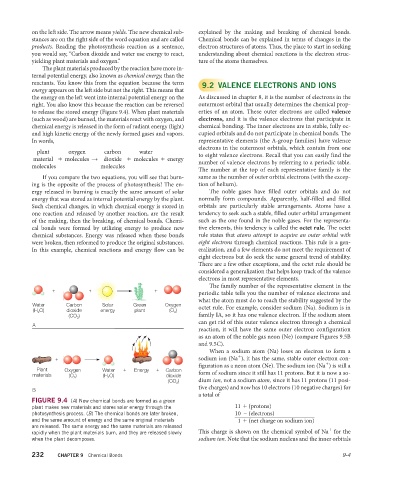
                   FIGURE 9.4  (A) New chemical bonds are formed as a green
                   plant makes new materials and stores solar energy through the      11 + (protons)
                   photosynthesis process. (B) The chemical bonds are later broken,   10  – (electrons)
                   and the same amount of energy and the same original materials       1 + (net charge on sodium ion)
                   are released. The same energy and the same materials are released                                 +
                   rapidly when the plant materials burn, and they are released slowly   This charge is shown on the chemical symbol of Na  for the
                   when the plant decomposes.                             sodium ion. Note that the sodium nucleus and the inner orbitals

                   232     CHAPTER 9 Chemical Bonds                                                                       9-4

