


Page 278 - 9780077418427.pdf
P. 278
/Users/user-f465/Desktop
          tiL12214_ch10_251-274.indd Page 255  9/3/10  6:11 PM user-f465
          tiL12214_ch10_251-274.indd Page 255  9/3/10  6:11 PM user-f465                                                /Users/user-f465/Desktop


                              CONCEPTS Applied

                              Most for the Money
                          Chemical fertilizers are added to the soil when it does not
                          contain sufficient elements essential for plant growth (see
                          Figure 10.1). The three critical elements are nitrogen,
                          phosphorus, and  potassium, and these are the basic
                          ingredients in most chemical fertilizers. In general, lawns
                          require fertilizers high in nitrogen, and gardens require
                          fertilizers high in phosphorus.
                             Read the labels on commercial packages of
                          chemical fertilizers sold in a garden shop. Find the
                          name of the chemical that supplies each of these critical
                          elements; for example, nitrogen is sometimes supplied
                          by ammonium nitrate NH 4 NO 3 . Calculate the mass
                          percentage of each critical element supplied according
                          to the label information. Compare these percentages to
                          the grade number of the fertilizer, for example, 10–20–
                          10. Determine which fertilizer brand gives you the most
                          nutrients for the money.
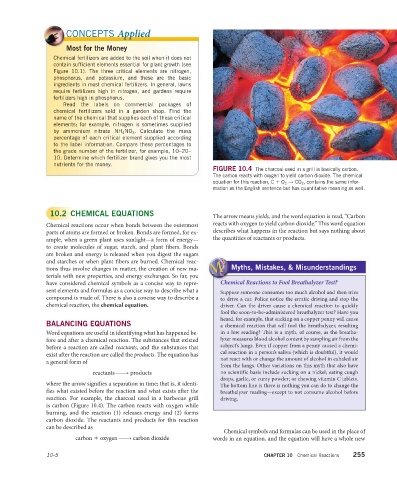
                                                                               FIGURE 10.4  The charcoal used in a grill is basically carbon.
                                                                               The carbon reacts with oxygen to yield carbon dioxide. The chemical
                                                                               equation for this reaction, C + O 2  → CO 2 , contains the same infor-
                                                                               mation as the English sentence but has quantitative meaning as well.


                         10.2 CHEMICAL EQUATIONS                               The arrow means yields, and the word equation is read, “Carbon

                       Chemical reactions occur when bonds between the outermost   reacts with oxygen to yield carbon dioxide.” This word equation
                       parts of atoms are formed or broken. Bonds are formed, for ex-  describes what happens in the reaction but says nothing about
                       ample, when a green plant uses sunlight—a form of energy—  the quantities of reactants or products.
                       to create molecules of sugar, starch, and plant fibers. Bonds
                       are broken and energy is released when you digest the sugars
                       and starches or when plant fibers are burned. Chemical reac-
                       tions thus involve changes in matter, the creation of new ma-  Myths, Mistakes, & Misunderstandings
                       terials with new properties, and energy exchanges. So far, you
                       have considered chemical symbols as a concise way to repre-  Chemical Reactions to Fool Breathalyzer Test?
                       sent elements and formulas as a concise way to describe what a   Suppose someone consumes too much alcohol and then tries
                       compound is made of. There is also a concise way to describe a   to drive a car. Police notice the erratic driving and stop the
                       chemical reaction, the chemical equation.                 driver. Can the driver cause a chemical reaction to quickly
                                                                                 fool the soon-to-be-administered breathalyzer test? Have you
                                                                                 heard, for example, that sucking on a copper penny will cause
                       BALANCING EQUATIONS                                       a chemical reaction that will fool the breathalyzer, resulting
                       Word equations are useful in identifying what has happened be-  in a low reading? This is a myth, of course, as the breatha-
                       fore and after a chemical reaction. The substances that existed   lyzer measures blood alcohol content by sampling air from the
                       before a reaction are called reactants, and the substances that   subject’s lungs. Even if copper from a penny caused a chemi-
                                                                                 cal reaction in a person’s saliva (which is doubtful), it would
                       exist after the reaction are called the products. The equation has
                                                                                 not react with or change the amount of alcohol in exhaled air
                       a general form of
                                                                                 from the lungs. Other variations on this myth that also have
                                       reactants  → products                     no scientific basis include sucking on a nickel; eating cough
                                                                                 drops, garlic, or curry powder; or chewing vitamin C tablets.
                       where the arrow signifies a separation in time; that is, it identi-  The bottom line is there is nothing you can do to change the
                       fies what existed before the reaction and what exists after the   breathalyzer reading—except to not consume alcohol before
                         reaction. For example, the charcoal used in a barbecue grill   driving.
                       is carbon (Figure 10.4). The carbon reacts with oxygen while
                       burning, and the reaction (1) releases energy and (2) forms
                         carbon dioxide. The reactants and products for this reaction
                       can be described as
                                                                                  Chemical symbols and formulas can be used in the place of
                                 carbon + oxygen  → carbon dioxide             words in an equation, and the equation will have a whole new

                       10-5                                                                     CHAPTER 10  Chemical Reactions   255

