


Page 279 - 9780077418427.pdf
P. 279
/Users/user-f465/Desktop
          tiL12214_ch10_251-274.indd Page 256  9/3/10  6:11 PM user-f465
          tiL12214_ch10_251-274.indd Page 256  9/3/10  6:11 PM user-f465                                                /Users/user-f465/Desktop


                   meaning. For example, the equation describing carbon reacting
                   with oxygen to yield carbon dioxide becomes              C     means           One atom of carbon

                                     C + O 2   → CO 2
                                                                            O     means           One atom of oxygen
                                                            (balanced)
                                                                                                  One molecule of oxygen consisting
                   The new, added meaning is that one atom of carbon (C) reacts   O 2  means      of two atoms of oxygen
                   with one molecule of oxygen (O 2 ) to yield one molecule of
                   carbon dioxide (CO 2 ). Note that the equation also shows one                  One molecule of carbon monoxide
                   atom of carbon and two atoms of oxygen (recall that oxygen   CO  means         consisting of one atom of carbon
                                                                                                  attached to one atom of oxygen
                   occurs as a diatomic molecule) as reactants on the left side
                   and one atom of carbon and two atoms of oxygen as products                     One molecule of carbon dioxide
                   on the right side. Since the same number of each kind of atom   CO 2  means    consisting of one atom of carbon
                                                                                                  attached to two atoms of oxygen
                     appears on both sides of the equation, the equation is said to
                   be balanced.                                                                   Three molecules of carbon dioxide,
                      You would not want to use a charcoal grill in a closed room                 each consisting of one atom of
                                                                            3 CO 2  means         carbon attached to two atoms of
                   because there might not be enough oxygen. An insufficient
                                                                                                  oxygen
                   supply of oxygen produces a completely different product, the
                   poisonous gas carbon monoxide (CO). An equation for this
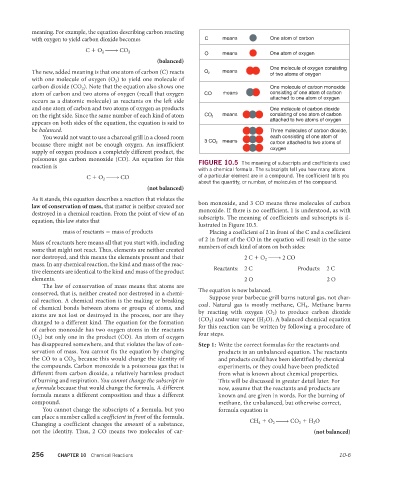
                                                                          FIGURE 10.5  The meaning of subscripts and coefficients used
                    reaction is
                                                                          with a chemical formula. The subscripts tell you how many atoms
                                     C + O 2   → CO                       of a particular element are in a compound. The coefficient tells you
                                                                          about the quantity, or number, of molecules of the compound.
                                                         (not balanced)
                   As it stands, this equation describes a reaction that violates the   bon monoxide, and 3 CO means three molecules of carbon
                   law of conservation of mass, that matter is neither created nor   monoxide. If there is no coefficient, 1 is understood, as with
                   destroyed in a chemical reaction. From the point of view of an     subscripts. The meaning of coefficients and subscripts is il-
                   equation, this law states that
                                                                          lustrated in  Figure 10.5.
                             mass of reactants = mass of products            Placing a coefficient of 2 in front of the C and a coefficient
                                                                          of 2 in front of the CO in the equation will result in the same
                   Mass of reactants here means all that you start with, including   numbers of each kind of atom on both sides:
                   some that might not react. Thus, elements are neither created
                   nor destroyed, and this means the elements present and their          2 C + O 2    → 2 CO
                   mass. In any chemical reaction, the kind and mass of the reac-  Reactants:  2 C         Products:  2 C
                   tive elements are identical to the kind and mass of the product
                   elements.                                                             2 O                                    2 O
                      The law of conservation of mass means that atoms are
                   conserved, that is, neither created nor destroyed in a chemi-  The equation is now balanced.
                                                                             Suppose your barbecue grill burns natural gas, not char-
                   cal reaction. A chemical reaction is the making or breaking   coal. Natural gas is mostly methane, CH 4 . Methane burns
                   of chemical bonds between atoms or groups of atoms, and   by  reacting with oxygen (O 2 ) to produce carbon dioxide
                   atoms are not lost or destroyed in the process, nor are they   (CO 2 ) and water vapor (H 2 O). A balanced chemical equation
                   changed to a different kind. The equation for the formation   for this reaction can be written by following a procedure of
                   of carbon monoxide has two oxygen atoms in the reactants   four steps.
                   (O 2 ) but only one in the product (CO). An atom of oxygen
                   has disappeared somewhere, and that violates the law of con-  Step 1: Write the correct formulas for the reactants and
                   servation of mass. You cannot fix the equation by changing    products in an unbalanced equation. The reactants
                   the CO to a CO 2 , because this would change the identity of   and products could have been identified by chemical
                   the compounds. Carbon monoxide is a poisonous gas that is     experiments, or they could have been predicted
                   different from carbon dioxide, a relatively harmless product   from what is known about chemical properties.
                   of burning and respiration. You cannot change the subscript in   This will be discussed in greater detail later. For
                   a formula because that would change the formula. A different   now, assume that the reactants and products are
                   formula means a different composition and thus a different    known and are given in words. For the burning of
                   compound.                                                     methane, the unbalanced, but otherwise correct,
                      You cannot change the subscripts of a formula, but you     formula equation is
                   can place a number called a coefficient in front of the formula.        CH 4  + O 2   → CO 2  + H 2 O
                   Changing a coefficient changes the  amount of a substance,
                   not the identity. Thus, 2 CO means two molecules of car-                                     (not balanced)


                   256     CHAPTER 10 Chemical Reactions                                                                10-6

