


Page 338 - 9780077418427.pdf
P. 338
/Users/user-f465/Desktop
          tiL12214_ch12_299-322.indd Page 315  9/3/10  6:13 PM user-f465
          tiL12214_ch12_299-322.indd Page 315  9/3/10  6:13 PM user-f465                                                /Users/user-f465/Desktop


                        Name             Chemical unit   Uses                Name              Chemical unit      Uses


                                                                                                H  CH 3
                                                                             Polyvinyl acetate                    Mixed with vinyl
                                            H  H                                                C  C              chloride to make
                        Polyethylene                     Squeeze bottles,                                         vinylite; used as an
                                                         containers,                            H  O
                                            C  C                                                                  adhesive and resin
                                                         laundry and trash bags,                                  in paint
                                            H  H         packaging                                C  CH 3
                                                   n                                              O
                                                                                                        n
                        Polypropylene       H  H         Indoor-outdoor carpet,  Styrene-butadiene  H  H  H  H  H  H  Automobile tires
                                                         pipe valves, bottles  rubber
                                            C  C                                                C  C  C  C  C  C
                                            H  CH 3                                             H       H    H
                                                   n                                                             n

                        Polyvinyl chloride  H  H         Plumbing pipes, synthetic  Polychloroprene  H Cl H  H    Shoe soles, heels
                        (PVC)                            leather, plastic tablecloths,  (Neoprene)
                                            C  C                                                C  C  C  C
                                                         phonograph records,
                                                         vinyl tile
                                            H  Cl                                               H       H
                                                   n                                                       n
                                            H  Cl
                        Polyvinylidene                   Flexible food wrap  Polymethyl        H  CH 3            Moldings, transparent
                        chloride (Saran)
                                            C  C                             methacrylate      C  C               surfaces on furniture,
                                                                             (Plexiglas, Lucite)                  lenses, jewelry,
                                            H  Cl                                              H                  transparent plastic
                                                   n                                                  n           “glass”
                                                                                                  C  O  CH 3
                        Polystyrene         H  H         Coolers, cups,
                        (Styrofoam)                      insulating foam, shock-                  O
                                            C  C
                                                         resistant packing material,
                                                         simulated wood furniture
                                            H                                Polycarbonate      CH 3              Tough, molded
                                                   n                         (Lexan)                              articles such as
                                                                                                C       O  C  O
                                                                                                                  motorcycle helmets
                                                                                                CH 3       O
                        Polytetrafluoroethylene  F  F    Gears, bearings, coating                               n
                        (Teflon)                         for nonstick surface of
                                            C  C
                                                         cooking utensils
                                             F  F                            Polyacrylonitrile  H  H              Textile fibers
                                                   n                         (Orlon, Acrilan,  C  C
                                                                             Creslan)
                                                                                                H  CN
                                                                                                      n
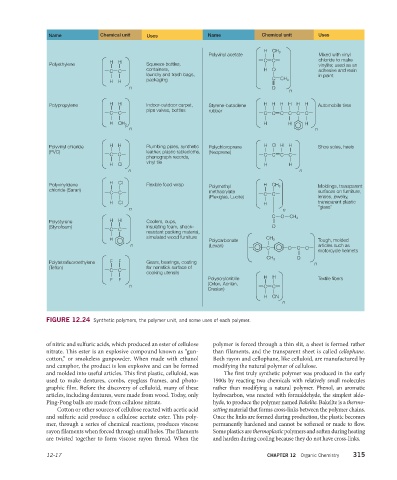
                       FIGURE 12.24  Synthetic polymers, the polymer unit, and some uses of each polymer.


                       of nitric and sulfuric acids, which produced an ester of cellulose     polymer is forced through a thin slit, a sheet is formed rather
                       nitrate. This ester is an explosive compound known as “gun-  than filaments, and the transparent sheet is called cellophane.
                         cotton,” or smokeless gunpowder. When made with ethanol   Both rayon and cellophane, like celluloid, are manufactured by
                       and camphor, the product is less explosive and can be formed   modifying the natural polymer of cellulose.
                       and molded into useful articles. This first plastic, celluloid, was   The first truly synthetic polymer was produced in the early
                       used to make dentures, combs, eyeglass frames, and photo-  1900s by reacting two chemicals with relatively small molecules
                       graphic film. Before the discovery of celluloid, many of these   rather than modifying a natural polymer. Phenol, an aromatic
                       articles, including dentures, were made from wood.  Today, only     hydrocarbon, was reacted with formaldehyde, the simplest alde-
                       Ping-Pong balls are made from cellulose  nitrate.       hyde, to produce the polymer named Bakelite. Bakelite is a thermo-
                           Cotton or other sources of cellulose reacted with acetic acid   setting material that forms cross-links between the polymer chains.
                       and sulfuric acid produce a cellulose acetate ester. This poly-  Once the links are formed during production, the plastic becomes
                       mer, through a series of chemical reactions, produces viscose     permanently hardened and cannot be softened or made to flow.
                       rayon filaments when forced through small holes. The filaments   Some plastics are thermoplastic polymers and soften during heating
                       are twisted together to form viscose rayon thread. When the   and harden during cooling because they do not have cross-links.

                       12-17                                                                     CHAPTER 12  Organic Chemistry   315

