


Page 137 - The Design Thinking Playbook
P. 137
HOW MIGHT WE...

                    further improve the creative space?


        After the initial experience with the prototype of a creative space, we must now develop it further and
        improve it based on what we have learned.


        1) What has worked well in the application? What would we like to have more of?

        The next level of a professional creative space has whiteboards attached to the walls already. These are
        good for visualization. Important inputs and papers can be attached to them with magnets (extra-strong
        magnets for posters and heavier paper). Chairs are available in different colors, and stackable versions
        are preferred. The tables should have rollers, if possible, and should be foldable, so they’re never in the
        way. Different working positions support the creative flow. As a supplement, tables on rollers can be very
        inspiring depending on the kind of workshop. Square measurements have proven useful; the tables used in
        the Design Space at the Stanford d.school have this shape. Four workshop participants can group around
        these tables, and enough space is left to sketch something or for prototyping.


        More unusual material wouldn’t go amiss for prototyping (Styrofoam, colored wool, wood, balloons, fab-
        rics, cardboard, and the good old extensive collection of Lego bricks all find a new home here). Everything
        handicraft shops have on offer and that can be put into prototypes is usable. Lilly’s favorite prototyping
        material is aluminum foil. Any shapes can be quickly created from it, and pieces can easily be made
        smaller without using scissors. There are no limits to the imagination—with time, you will realize that
        simple materials in particular have the potential for great prototypes.

        2) How do we want to work in the future, and what helps our wishes come true?

        With a more ample budget, the walls can be painted in colors that immediately create an inspiring environ-
        ment. Colors such as orange, blue, or red are welcome; for example orange stands for creativity, flexibility,
        and agility, and blue for communication, inspiration, and clarity. Colors and patterns on usually barren
        floors are outstanding for inducing creativity. Carpets of all sorts, PVC, homey wood, or paint can be used,
        depending on the suitability of the subsurface.


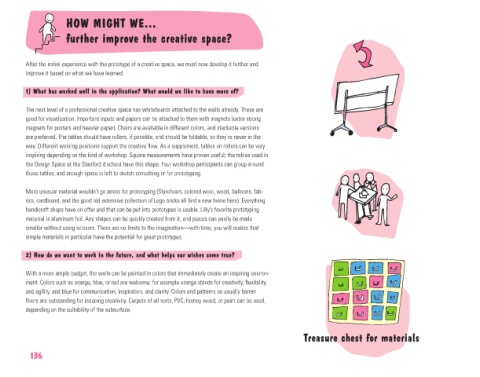
                                                                                        Treasure chest for materials

          136

