


Page 43 - The Design Thinking Playbook
P. 43
Define
                                  Understand  Observe    point of    Ideate    Prototype    Test
                                                          view


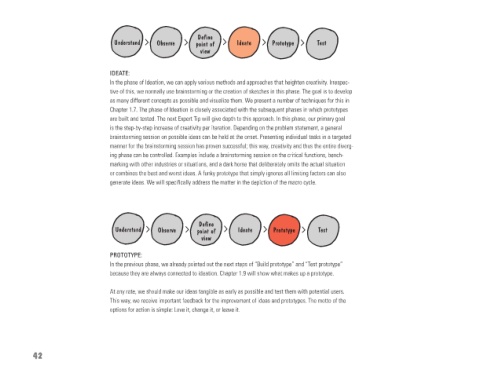
                                IDEATE:
                                In the phase of Ideation, we can apply various methods and approaches that heighten creativity. Irrespec-
                                tive of this, we normally use brainstorming or the creation of sketches in this phase. The goal is to develop
                                as many different concepts as possible and visualize them. We present a number of techniques for this in
                                Chapter 1.7. The phase of Ideation is closely associated with the subsequent phases in which prototypes
                                are built and tested. The next Expert Tip will give depth to this approach. In this phase, our primary goal
                                is the step-by-step increase of creativity per iteration. Depending on the problem statement, a general
                                brainstorming session on possible ideas can be held at the onset. Presenting individual tasks in a targeted
                                manner for the brainstorming session has proven successful; this way, creativity and thus the entire diverg-
                                ing phase can be controlled. Examples include a brainstorming session on the critical functions, bench-
                                marking with other industries or situations, and a dark horse that deliberately omits the actual situation
                                or combines the best and worst ideas. A funky prototype that simply ignores all limiting factors can also
                                generate ideas. We will specifically address the matter in the depiction of the macro cycle.


                                                          Define
                                  Understand  Observe    point of    Ideate    Prototype    Test
                                                           view

                                PROTOTYPE:
                                In the previous phase, we already pointed out the next steps of “Build prototype” and “Test prototype”
                                because they are always connected to ideation. Chapter 1.9 will show what makes up a prototype.

                                At any rate, we should make our ideas tangible as early as possible and test them with potential users.
                                This way, we receive important feedback for the improvement of ideas and prototypes. The motto of the
                                options for action is simple: Love it, change it, or leave it.


          42

