


Page 527 - MARSIUM'21 COMP OF PAPER
P. 527
2.3.1.3  Physical Environment and Customer Satisfaction

                   The significance of physical surroundings in establishing an image and influencing customer behaviours is especially relevant in
               the restaurant sector (Ryu & Jang, 2007). While the food and service must be of acceptable quality, the physical environment (e.g., layout
               and employee appearance) can significantly influence satisfaction levels and actual outcomes throughout the restaurant industry. Because
               services are primarily intangible and often need the customers to be involved in the process, the physical environment can significantly
               influence perceptions of the restaurant industry's overall quality and customer satisfaction  (Ryu & Jang, 2007). It proposed a substantial
               impact on consumer satisfaction in the physical environment (Bitner, 1990). In addition, a previous study studied the effect of the physical
               environment on the overall conception of a quality image of service (Bitner, 1992). She defined the word “servicescape” as a combined
               influence of all physical aspects that can be modified to improve the behaviour of customers and employees. The term "servicescape"
               refers to the "constructed environment," or more precisely, the "man-made, physical surrounds in contrast to the natural and social
               environment" (Bitner, 1992, p. 58).

                   Research reveals a direct correlation between the physical environment and results such as customer satisfaction, according to
               (Chebat & Michon, 2003). Furthermore, a previous study claimed that a customer's perception of the physical environment was a direct
               predictor  of  contentment,  implying  that  customer  satisfaction  was  positively  and  directly  connected  with  components  of  positive
               approach behaviours (Chang, 2000). As a result, restaurateurs may have an additional tool for managing customer satisfaction  and good
               approach behaviour. Therefore, the following hypothesis are presented:


               H 3: Physical environment has a significant positive influence customer satisfaction.


             2.3.1.4  Customer Perceived Value and Customer Satisfaction

                   Existing findings indicate that customer perceived value is a reliable predictor of customer satisfaction and consumer purchasing
               behaviour  (Ryu  et  al.,  2008).  According  to  Chiou  (2004),  the  customer's  perceived  value  was  a  significant  predictor  of  customer
               satisfaction with internet service providers. Customer perceived value was positively connected with customer satisfaction throughout
               the service industries, according to (Andreassen & Lindestad, 1998). Additionally, the previous study established a positive and direct
               association between consumers' perceived value and customer satisfaction (Aupperle et al., 2016). According to (Mcdougall & Levesque,
               2000), perceived service quality and customer perceived value were the two most important predictors of customer satisfaction across
               four service industries: restaurant, vehicle service, hairdressing, and dentist services. Therefore, the researcher hypothesizes:

               H 4: Customer perceived value has a significant positive influence customer satisfaction.


            2.4 RESEARCH FRAMEWORK MODEL

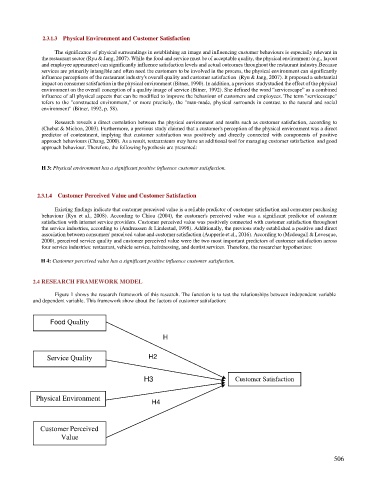
                   Figure 1 shows the research framework of this research. The function is to test the relationships between independent variable
            and dependent variable. This framework show about the factors of customer satisfaction:


                  Food Quality

                                                         H


                 Service Quality                    H2


                                                 H3                            Customer Satisfaction


             Physical Environment
                                                     H4


              Customer Perceived
                     Value


                                                                                                                506

