


Page 122 - Essentials of Nursing Leadership and Management, 5th Edition
P. 122
CikguOnline
         2208_Ch08_103-114.qxd  11/6/09  5:58 PM  Page 109
                                                                    chapter 8 | People and the Process of Change 109       CikguOnline
                                                             ■ What can be done to prevent or overcome this
                           Design the Change
                                                              resistance?
                                                             The context in which the change will take place is
                                                             another factor to consider when assessing resist-
                         Plan the Implementation
                                                             ance to change (Lichiello & Madden, 1996). This
                                                             includes the amount of change occurring at the
                                                             same time, the organizational climate, the environ-
                                                             ment surrounding the organization, and past histo-
                          Implement the Change
                                                             ry of change in the organization. Is there goodwill
                                                             toward change because it has gone well in the past?
                                                             Or have the changes gone badly, generating ill will
                          Integrate the Change               and resistance to additional change (Maurer,
                                                             2008)? There may be external pressure to change
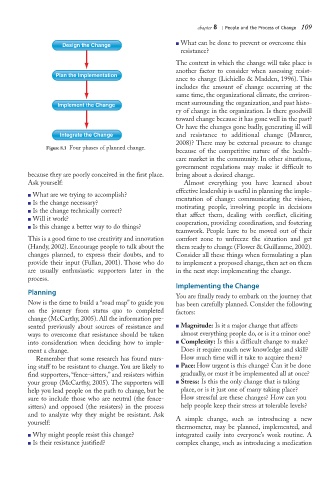
                      Figure 8.3 Four phases of planned change.
                                                             because of the competitive nature of the health-
                                                             care market in the community. In other situations,
                                                             government regulations may make it difficult to
                 because they are poorly conceived in the first place.  bring about a desired change.
                 Ask yourself:                                 Almost everything you have learned about
                                                             effective leadership is useful in planning the imple-
                 ■ What are we trying to accomplish?
                                                             mentation of change: communicating the vision,
                 ■ Is the change necessary?
                                                             motivating people, involving people in decisions
                 ■ Is the change technically correct?
                                                             that affect them, dealing with conflict, eliciting
                 ■ Will it work?
                                                             cooperation, providing coordination, and fostering
                 ■ Is this change a better way to do things?
                                                             teamwork. People have to be moved out of their
                 This is a good time to use creativity and innovation  comfort zone to unfreeze the situation and get
                 (Handy, 2002). Encourage people to talk about the  them ready to change (Flower & Guillaume,2002).
                 changes planned, to express their doubts, and to  Consider all these things when formulating a plan
                 provide their input (Fullan, 2001). Those who do  to implement a proposed change, then act on them
                 are usually enthusiastic supporters later in the  in the next step: implementing the change.
                 process.
                                                             Implementing the Change
                 Planning
                                                             You are finally ready to embark on the journey that
                 Now is the time to build a “road map” to guide you  has been carefully planned. Consider the following
                 on the journey from status quo to completed  factors:
                 change (McCarthy, 2005). All the information pre-
                 sented previously about sources of resistance and  ■ Magnitude: Is it a major change that affects
                 ways to overcome that resistance should be taken  almost everything people do, or is it a minor one?
                 into consideration when deciding how to imple-  ■ Complexity: Is this a difficult change to make?
                 ment a change.                               Does it require much new knowledge and skill?
                   Remember that some research has found nurs-  How much time will it take to acquire them?
                 ing staff to be resistant to change. You are likely to  ■ Pace: How urgent is this change? Can it be done
                 find supporters, “fence-sitters,” and resisters within  gradually, or must it be implemented all at once?
                 your group (McCarthy, 2005). The supporters will  ■ Stress: Is this the only change that is taking
                 help you lead people on the path to change, but be  place, or is it just one of many taking place?
                 sure to include those who are neutral (the fence-  How stressful are these changes? How can you
                 sitters) and opposed (the resisters) in the process  help people keep their stress at tolerable levels?
                 and to analyze why they might be resistant. Ask
                                                             A simple change, such as introducing a new
                 yourself:
                                                             thermometer, may be planned, implemented, and
                 ■ Why might people resist this change?      integrated easily into everyone’s work routine. A
                 ■ Is their resistance justified?            complex change, such as introducing a medication

