


Page 119 - Essentials of Nursing Leadership and Management, 5th Edition
P. 119
CikguOnline
         2208_Ch08_103-114.qxd  11/6/09  5:58 PM  Page 106
               106   unit 2 | Working Within the Organization                                                              CikguOnline
                 committee recognized that this objection was based  needs (those lower on the hierarchy) must be at
                 on technical concerns and requested a study of  least partially met before a person is motivated to
                 the evidence before instituting the change. “It’s  seek fulfillment of the higher-order needs.
                 important to investigate the evidence supporting a  Change may make it more difficult for a person
                 proposed change thoroughly before recommending  to meet any or all of his or her needs. It may
                 it,” she said.                             threaten the powerful safety and security needs that
                                                            Maslow discussed (Hunter, 2004). For example, if a
               A change may provide resistance for practical rea-
                                                            massive downsizing occurs and a person’s job is
               sons. For example, if the bar codes on patients’arm-
                                                            eliminated, fulfillment of all of these levels of needs
               bands are difficult to scan, nurses may develop a
                                                            may be threatened, from having enough money to
               way to work around this safety feature by taping a
                                                            pay for food and shelter to opportunities to fulfill
               duplicate armband to the bed or to a clipboard
                                                            one’s career potential.
               (Englebright & Franklin, 2005), defeating the
                                                              In other cases, the threat is subtler and may be
               purpose of instituting electronically monitored
                                                            harder to anticipate.For example,an institution-wide
               medication administration.
                                                            reevaluation of the effectiveness of the advanced
               Psychosocial Needs                           practice role would be a great concern to a staff nurse
                                                            who is working toward accomplishing a lifelong
               Change often creates anxiety, much of it related to
                                                            dream of becoming an advanced practice nurse in
               what people fear they might lose (Berman-Rubera,
                                                            oncology. In contrast, it would have little effect on
               2008; Johnston, 2008). According to Maslow
                                                            unlicensed assistive personnel (UAPs), but a staff
               (1970), human beings have a hierarchy of needs,
                                                            reorganization that moves UAP to different units
               from the basic physiological needs for oxygen, flu-
                                                            could threaten the belonging needs of those who
               ids, and nutrients to the higher-order needs
                                                            have close friends on the unit but few friends outside.
               for belonging, self-esteem, and self-actualization
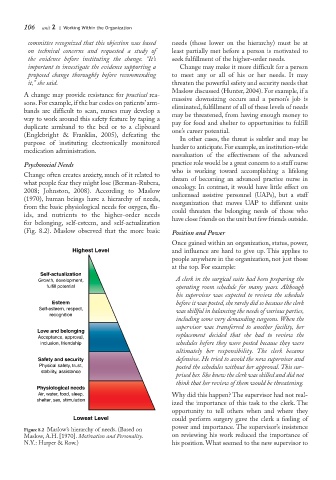
               (Fig. 8.2). Maslow observed that the more basic  Position and Power
                                                            Once gained within an organization, status, power,
                              Highest Level                 and influence are hard to give up. This applies to
                                                            people anywhere in the organization, not just those
                                                            at the top. For example:
                    Self-actualization
                    Growth, development,                     A clerk in the surgical suite had been preparing the
                      fulfill potential                      operating room schedule for many years. Although
                                                             his supervisor was expected to review the schedule
                        Esteem                               before it was posted, she rarely did so because the clerk
                    Self-esteem, respect,                    was skillful in balancing the needs of various parties,
                       recognition
                                                             including some very demanding surgeons. When the
                                                             supervisor was transferred to another facility, her
                   Love and belonging
                    Acceptance, approval,                    replacement decided that she had to review the
                    inclusion, friendship                    schedules before they were posted because they were
                                                             ultimately her responsibility. The clerk became
                    Safety and security                      defensive. He tried to avoid the new supervisor and
                    Physical safety, trust,                  posted the schedules without her approval. This sur-
                     stability, assistance
                                                             prised her. She knew the clerk was skilled and did not
                                                             think that her review of them would be threatening.
                   Physiological needs
                    Air, water, food, sleep,                Why did this happen? The supervisor had not real-
                   shelter, sex, stimulation
                                                            ized the importance of this task to the clerk. The
                                                            opportunity to tell others when and where they
                              Lowest Level                  could perform surgery gave the clerk a feeling of
                                                            power and importance. The supervisor’s insistence
               Figure 8.2 Maslow’s hierarchy of needs. (Based on
               Maslow, A.H. [1970]. Motivation and Personality.  on reviewing his work reduced the importance of
               N.Y.: Harper & Row.)                         his position.What seemed to the new supervisor to

