


Page 29 - Essentials of Nursing Leadership and Management, 5th Edition
P. 29
CikguOnline
         2208_Ch02_013-020.qxd  11/6/09  5:54 PM  Page 16
               16   unit 1 | Professional Considerations                                                                   CikguOnline
                  The effective nurse manager possesses a combi-
               nation of qualities: leadership, clinical expertise, and  Informational
               business sense. None of these alone is enough; it is
               the combination that prepares an individual for the  Representing employees
               complex task of managing a unit or team of health-  Representing the organization
               care providers. Consider each of these briefly:     Public relations monitoring

               ■ Leadership. All of the people skills of the leader
                 are essential to the effective manager. They are
                 skills needed to function as a manager.               Interpersonal
               ■ Clinical expertise. It is very difficult to help
                 others develop their skills and evaluate how well  Networking
                 they have done so without possessing clinical  Conflict negotiation and resolution
                 expertise oneself. It is probably not necessary
                                                                Employee development and coaching
                 (or even possible) to know everything all other
                                                                Rewards and punishment
                 professionals on the team know, but it is impor-
                 tant to be able to assess the effectiveness of their
                 work in terms of patient outcomes.                      Decisional
               ■ Business sense. Nurse managers also need to
                 be concerned with the “bottom line,” with the     Employee evaluation
                 cost of providing the care that is given, especially  Resource allocation
                 in comparison with the benefit received           Hiring and firing employees
                 from that care and the funding available to       Planning
                 pay for it, whether from insurance, Medicare,     Job analysis and redesign
                 Medicaid, or out of the patient’s own pocket.
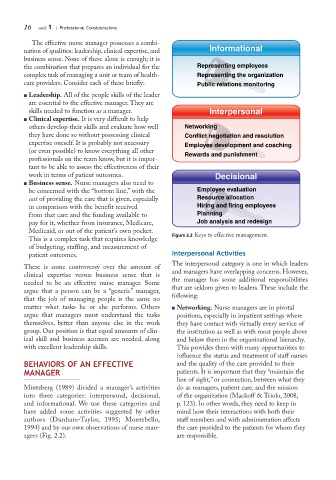
                                                            Figure 2.2 Keys to effective management.
                 This is a complex task that requires knowledge
                 of budgeting, staffing, and measurement of
                 patient outcomes.                          Interpersonal Activities
                                                            The interpersonal category is one in which leaders
               There is some controversy over the amount of
                                                            and managers have overlapping concerns. However,
               clinical expertise versus business sense that is
                                                            the manager has some additional responsibilities
               needed to be an effective nurse manager. Some
                                                            that are seldom given to leaders. These include the
               argue that a person can be a  “generic” manager,
                                                            following:
               that the job of managing people is the same no
               matter what tasks he or she performs. Others  ■ Networking. Nurse managers are in pivotal
               argue that managers must understand the tasks  positions, especially in inpatient settings where
               themselves, better than anyone else in the work  they have contact with virtually every service of
               group. Our position is that equal amounts of clin-  the institution as well as with most people above
               ical skill and business acumen are needed, along  and below them in the organizational hierarchy.
               with excellent leadership skills.             This provides them with many opportunities to
                                                             influence the status and treatment of staff nurses
               BEHAVIORS OF AN EFFECTIVE                     and the quality of the care provided to their
               MANAGER                                       patients. It is important that they “maintain the
                                                             line of sight,” or connection, between what they
               Mintzberg (1989) divided a manager’s activities  do as managers, patient care, and the mission
               into three categories: interpersonal, decisional,  of the organization (Mackoff & Triolo, 2008,
               and informational. We use these categories and  p. 123). In other words, they need to keep in
               have added some activities suggested by other  mind how their interactions with both their
               authors (Dunham-Taylor, 1995; Montebello,     staff members and with administration affects
               1994) and by our own observations of nurse man-  the care provided to the patients for whom they
               agers (Fig. 2.2).                             are responsible.

