


Page 44 - Advanced Course
P. 44
KNX ADVANCED COURSE

                                       To achieve a uniform distribution of heat
                                       in the room, the heater should be placed
                                       in the coldest place. This is under the
                                       window in most cases. The heater
                                       should at least be as wide as the
                                       window.
                                       Note: All the pipes of the wiring system
                                       should be carefully and sufficiently
                                       insulated. In well-insulated buildings,
                                       pipes without sufficient insulation can
                                       already heat up the rooms (when the
                                       angle-type valve is closed). Closed-loop
                                       control is then no longer possible.
                                       Caution: When using a room
                                       temperature controller, no additional
                                       unregulated heating systems may be
                                       located in the room!

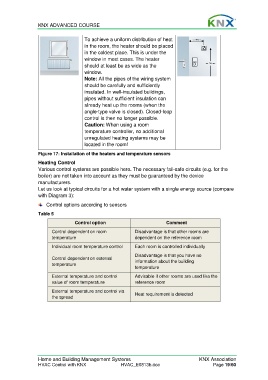
                  Figure 17: Installation of the heaters and temperature sensors
                  Heating Control
                  Various control systems are possible here. The necessary fail-safe circuits (e.g. for the
                  boiler) are not taken into account as they must be guaranteed by the device
                  manufacturers.
                  Let us look at typical circuits for a hot water system with a single energy source (compare
                  with Diagram 3):

                      Control options according to sensors
                  Table 5

                                  Control option                           Comment
                        Control dependent on room            Disadvantage is that other rooms are
                        temperature                          dependent on the reference room
                        Individual room temperature control   Each room is controlled individually

                                                             Disadvantage is that you have no
                        Control dependent on external        information about the building
                        temperature
                                                             temperature

                        External temperature and control     Advisable if other rooms are used like the
                        value of room temperature            reference room

                        External temperature and control via   Heat requirement is detected
                        the spread


                  Home and Building Management Systems                                    KNX Association
                  HVAC Control with KNX                HVAC_E0813b.doc                          Page 19/60

