


Page 10 - GeoPRISMS_Newsletter_Spring2019_42_Neat
P. 10
The Aleutian arc through and through:


        How subduction dynamics influence the

        generation, storage, and eruption of volatile-


        bearing magmas


        Daniel Rasmussen (LDEO, Columbia University), Terry Plank (LDEO, Columbia University),
        Diana Roman (Carnegie Institution)


                oes the volcano know about the slab? Our work in the central-eastern Aleutian arc seeks to address this question. Spanning from
                Seguam volcano (west) to Shishaldin volcano (east), our corridor is marked by significant variations in magmatic water contents,
        Dseismicity, deformation, and style and frequency of volcanism. By contrast, most subduction parameters, such as slab age and
        velocity, remain constant. One significant exception is the depth of the slab below the frontal arc volcanoes, which transitions from a near
        global minimum in the west (~65 km BSL) to a more typical depth in the east (~100 km BSL). This makes our corridor an ideal locality to
        isolate the role of slab depth in driving magmatic processes. After a one-year-long seismic deployment, forty five-gallon buckets of new rock
        samples, and one PhD dissertation, we are arriving at some answers.

        The broad strokes of arc magma genesis are well   55°N                               Shishaldin
        established: hydrated sediment and oceanic     Rock samples                         Fisher
        lithosphere subduct and release fluids and/   a                                   Westdahl
        or solids that drive melting of the overlying                           Makushin Akutan
        mantle wedge, generating hydrous arc magmas  54°N                Bogoslof
        that ascend to regions of melt coalescence
        either within or beneath the crust. However,                    Okmok
        understanding transport and storage of magmas   150 km      Vsevidof
        in the crust represents a fundamental challenge   53°N  100 km  Cleveland                         6.9 cm/yr
        to the study of evolution and eruption of   Seguam
        arc magmas. Recent development of several       50 km                                   7.0
        geochemical and geophysical tools enables us to   52°N
        closely track the path of magma through the crust,                                                    Alaska
        particularly in the upper crust. We are employing                     7.2         1.6  Kamchatka
                                                                                          2.4
        these tools to illuminate the development and                                   Bathymetry (km)  3.2    6.2 cm/a
        eruption of upper crustal reservoirs and link these   51°N  7.3       100 km      4.1          7.8  AFZ  7.3  6.9
                                                                                          4.9
        processes to arc magma genesis.
                                                       172°W      170°W      168°W      166°W      164°W      162°W

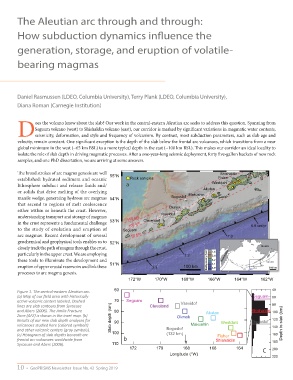
        Figure 1. The central-eastern Aleutian arc.   60                                                           40
        (a) Map of our field area with historically                                                        Seguam  60
        active volcanic centers labeled. Dashed   70  Seguam                 Vsevidof
        lines are slab contours from Syracuse                   Cleveland                                          80
        and Abers (2006). The Amlia Fracture     80                                    Akutan             Shishaldin  100
        Zone (AFZ) is shown in the inset map. (b)                          Okmok
        Results of our new slab depth analyses for   Slab depth (km)  90                     Westdahl     Bogoslof  120
        volcanoes studied here (colored symbols)                                 Makushin                          140 Depth to slab (km)
        and other volcanic centers (gray symbols).                     Bogoslof
        (c) Histogram of slab depths beneath arc   100                 (132 km)             Fisher                 160
        frontal arc volcanoes worldwide from         b                                     Shishaldin              180
        Syracuse and Abers (2006).              110
                                                       172        170        168         166        164        C   200
                                                                        Longitude (°W)
                                                                                                                   220
        10  •  GeoPRISMS Newsletter  Issue No. 42  Spring 2019

