


Page 89 - digitalliteracy
P. 89
4.3 Communicating Through Social Media


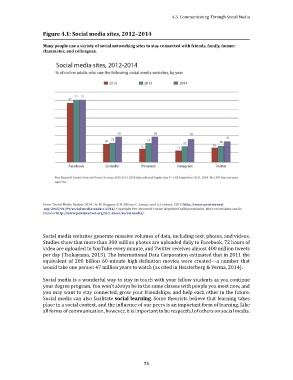
                   Figure 4.1: Social media sites, 2012–2014

                   Many people use a variety of social networking sites to stay connected with friends, family, former
                   classmates, and colleagues.


                   From “Social Media Update 2014,” by M. Duggan, N. B. Ellison, C. Lampe, and A. Lenhart, 2015 (http://www.pewinternet
                   .org/2015/01/09/social-media-update-2014). Copyright Pew Research Center. Reprinted with permission. More recent data can be
                   found at http://www.pewinternet.org/fact-sheet/social-media/.


                   Social media websites generate massive volumes of data, including text, photos, and videos.
                   Studies show that more than 300 million photos are uploaded daily to Facebook, 72 hours of
                   video are uploaded to YouTube every minute, and Twitter receives almost 400 million tweets
                   per day (Tsukayama, 2013). The International Data Corporation estimated that in 2011 the
                   equivalent  of 200  billion  60-minute high-definition  movies  were created—a number that
                   would take one person 47 million years to watch (as cited in Heisterberg & Verma, 2014).

                   Social media is a wonderful way to stay in touch with your fellow students as you continue
                   your degree program. You won’t always be in the same classes with people you meet now, and
                   you may want to stay connected, grow your friendships, and help each other in the future.
                   Social media can also facilitate social learning. Some theorists believe that learning takes
                   place in a social context, and the influence of our peers is an important form of learning. Like
                   all forms of communication, however, it is important to be respectful of others on social media.


                                                             73

