


Page 55 - Mammal (DK Eyewitness)
P. 55
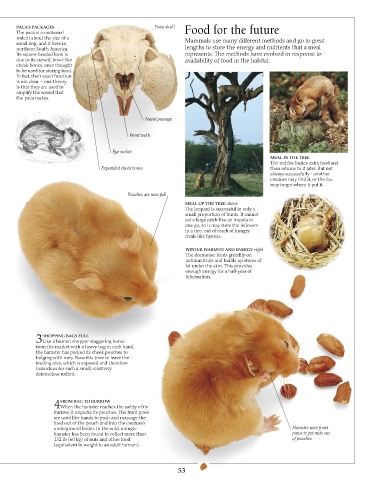
PACA’S PACKAGES                               Paca skull  Food for the future
      The paca is a nocturnal
      rodent about the size of a                              Mammals use many different methods and go to great
      small dog, and it lives in
      northern South America.                                 lengths to store the energy and nutrients that a meal
      Its square-headed look is                               represents. The methods have evolved in response to
      due to its curved, bowl-like                            availability of food in the habitat.
      cheek bones, once thought
      to be used for storing food.
      In fact, their exact function
      is not clear – one theory
      is that they are used to
      amplify the sound that
      the paca makes.


                                                 Nasal passage

                                            Front teeth


                                      Eye socket
                                                                                           MEAL IN THE TREE
                                                                                           The red fox buries extra food and
                                   Expanded cheek bones                                    then returns to it later. But not
                                                                                           always successfully - another
                                                                                           creature may find it, or the fox
                                                                                           may forget where it put it.
                                           Pouches are now full
                                                              MEAL UP THE TREE above
                                                              The leopard is successful in only a
                                                              small proportion of hunts. It cannot
                                                              eat a large catch like an impala in
                                                              one go, so it may store the leftovers
                                                              in a tree, out of reach of hungry
                                                              rivals like hyenas.

                                                              WINTER WARMTH AND ENERGY right
                                                              The dormouse feeds greedily on
                                                              autumn fruits and builds up stores of
                                                              fat under the skin. This provides
                                                              enough energy for a half-year of
                                                              hibernation.


               SHOPPING BAGS FULL
               L
             3 ike a human shopper staggering home
             from the market with a heavy bag in each hand,
             the hamster has packed its cheek pouches to
             bulging with nuts. Now it is time to leave the
             feeding area, which is exposed and therefore
             hazardous for such a small, relatively
             defenseless rodent.


                     FROM BAG TO BURROW
                   4 When the hamster reaches the safety of its
                   burrow, it unpacks its pouches. The front paws
                   are used like hands to push and massage the
                   food out of the pouch and into the creature’s
                   underground larder. In the wild, a single                                      Hamster uses front
                   hamster has been found to collect more than                                    paws to get nuts out
                   132 lb (60 kg) of nuts and other food                                          of pouches
                   (equivalent in weight to an adult human).


                                                            53


 (c) 2011 Dorling Kindersley. All Rights Reserved.

