


Page 321 - Encyclopedia of Aquarium and Pond Fish, 3rd Edition
P. 321
POND MANAGEMENT     319

                                   Removing leaves in the fall
                                   is easier if netting is placed over
                                   the surface of the pond.
                                   other plants or any females
                                   have been driven out of the
                                   pond by overenergetic
                                   males. During the summer,
                                   the increased temperature
                                   of the water and greater
         activity levels of the fish result in lower oxygen levels. If not
         controlled, plant and algal growth also reduces oxygen levels
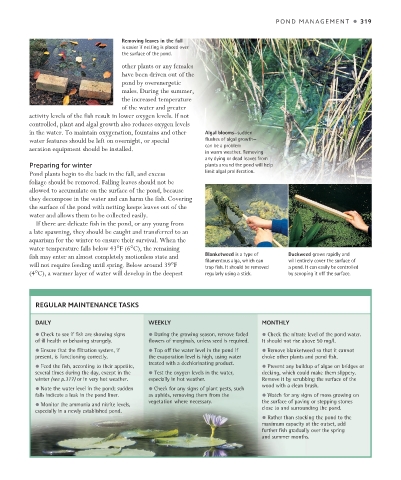
         in the water. To maintain oxygenation, fountains and other   Algal blooms—sudden
         water features should be left on overnight, or special    flushes of algal growth—
         aeration equipment should be installed.          can be a problem
                                                          in warm weather. Removing
                                                          any dying or dead leaves from
         Preparing for winter                             plants around the pond will help
         Pond plants begin to die back in the fall, and excess    limit algal proliferation.
         foliage should be removed. Falling leaves should not be
         allowed to accumulate on the surface of the pond, because
         they decompose in the water and can harm the fish. Covering
         the surface of the pond with netting keeps leaves out of the
         water and allows them to be collected easily.
           If there are delicate fish in the pond, or any young from
         a late spawning, they should be caught and transferred to an
         aquarium for the winter to ensure their survival. When the
         water temperature falls below 43°F (6°C), the remaining
         fish may enter an almost completely motionless state and    Blanketweed is a type of   Duckweed grows rapidly and
         will not require feeding until spring. Below around 39°F    filamentous alga, which can    will entirely cover the surface of
                                                                                 a pond. It can easily be controlled
                                                          trap fish. It should be removed
         (4°C), a warmer layer of water will develop in the deepest    regularly using a stick.  by scooping it off the surface.


           REGULAR MAINTENANCE TASKS

           DAILY                          WEEKLY                         MONTHLY
           •  Check to see if fish are showing signs    •  During the growing season, remove faded   •  Check the nitrate level of the pond water.
           of ill health or behaving strangely.  flowers of marginals, unless seed is required.  It should not rise above 50 mg/l.
           •  Ensure that the filtration system, if    •  Top off the water level in the pond if    •  Remove blanketweed so that it cannot
           present, is functioning correctly.  the evaporation level is high, using water   choke other plants and pond fish.
           •  Feed the fish, according to their appetite,   treated with a dechlorinating product.  •  Prevent any buildup of algae on bridges or
           several times during the day, except in the   •  Test the oxygen levels in the water,   decking, which could make them slippery.
           winter (see p.317) or in very hot weather.  especially in hot weather.  Remove it by scrubbing the surface of the
           •  Note the water level in the pond; sudden   •  Check for any signs of plant pests, such    wood with a clean brush.
           falls indicate a leak in the pond liner.  as aphids, removing them from the   •  Watch for any signs of moss growing on
           •  Monitor the ammonia and nitrite levels,   vegetation where necessary.  the surface of paving or stepping stones
           especially in a newly established pond.                       close to and surrounding the pond.
                                                                         •  Rather than stocking the pond to the
                                                                         maximum capacity at the outset, add
                                                                         further fish gradually over the spring
                                                                         and summer months.


   US_318-321_Monit_clean_Health_C.indd   319                                                        29/08/18   4:11 PM

