


Page 338 - Encyclopedia of Aquarium and Pond Fish, 3rd Edition
P. 338
336    POND FISH DIRECTORY


          Carassius auratus
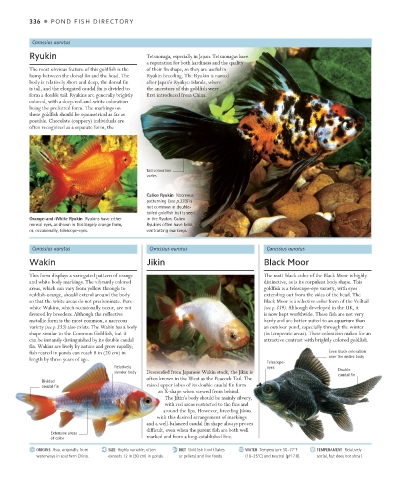
         Ryukin                          Tetsuonaga, especially in Japan. Tetsuonagas have
                                         a reputation for both hardiness and the quality
         The most obvious feature of this goldfish is the   of their fin shape, so they are useful in
         hump between the dorsal fin and the head. The   Ryukin breeding. The Ryukin is named
         body is relatively short and deep, the dorsal fin    after Japan’s Ryukyu Islands, where
         is tall, and the elongated caudal fin is divided to   the ancestors of this goldfish were
         form a double tail. Ryukins are generally brightly   first introduced from China.
         colored, with a deep-red-and-white coloration
         being the preferred form. The markings on
         these goldfish should be symmetrical as far as
         possible. Chocolate (coppery) individuals are
         often recognized as a separate form, the


                                         Tail coloration
                                         varies

                                         Calico Ryukin  Nacreous
                                         patterning (see p.333) is
                                         not common in double-
                                         tailed goldfish but is seen
         Orange-and-White Ryukin  Ryukins have either    in the Ryukin. Calico
         normal eyes, as shown in this largely orange form,    Ryukins often have bold,
         or, occasionally, telescope-eyes.  contrasting markings.

          Carassius auratus               Carassius auratus               Carassius auratus
         Wakin                           Jikin                            Black Moor

         This form displays a variegated pattern of orange                The matt-black color of the Black Moor is highly
         and white body markings. The vibrantly colored                   distinctive, as is its corpulent body shape. This
         areas, which can vary from yellow through to                     goldfish is a telescope-eye variety, with eyes
         reddish-orange, should extend around the body                    extending out from the sides of the head. The
         so that the white areas do not predominate. Pure-                Black Moor is a selective color form of the Veiltail
         white Wakins, which occasionally occur, are not                  (see p.339). Although developed in the UK, it
         favored by breeders. Although the reflective                     is now kept worldwide. These fish are not very
         metallic form is the most common, a nacreous                     hardy and are better suited to an aquarium than
         variety (see p.333) also exists. The Wakin has a body            an outdoor pond, especially through the winter
         shape similar to the Common Goldfish, but it                     (in temperate areas). Their coloration makes for an
         can be instantly distinguished by its double caudal              attractive contrast with brightly colored goldfish.
         fin. Wakins are lively by nature and grow rapidly;
         fish reared in ponds can reach 8 in (20 cm) in                                     Even black coloration
         length by three years of age.                                                      over the entire body
                                                                           Telescope-
                                 Relatively                                eyes
                                 slender body  Descended from Japanese Wakin stock, the Jikin is   Double
                                                                                              caudal fin
                                         often known in the West as the Peacock Tail. The
             Divided
             caudal fin                  raised upper lobes of its double caudal fin form
                                             an X-shape when viewed from behind.
                                              The Jikin’s body should be mainly silvery,
                                              with red areas restricted to the fins and
                                              around the lips. However, breeding Jikins
                                            with this desired arrangement of markings
                                         and a well-balanced caudal fin shape always proves
                                         difficult, even when the parent fish are both well
               Extensive areas
               of color                  marked and from a long-established line.
           ORIGINS  Asia, originally from   SIZE  Highly variable; often   DIET  Goldfish food (flakes    WATER  Temperature 50–77°F   TEMPERAMENT  Relatively
           waterways in southern China.  exceeds 12 in (30 cm) in ponds.  or pellets) and live foods.  (10–25°C) and neutral (pH 7.0).  social, but does not shoal.


   US_336-337_Goldfish_3.indd   336                                                                  29/08/18   4:11 PM

