


Page 51 - Atlas Of The World's Strangest Animals
P. 51
PROBOSCIS MONKEY               51


              The proboscis monkey’s huge nose is so striking that it’s  Due to such a specialized diet, proboscis monkeys and
             easy to overlook their other prominent feature – their   their relatives are known as leaf monkeys.As leaves aren’t
             big bellies!                                           especially nutritious, members of this group must eat a lot
              These sociable animals live in troops of up to 40, spending  of foliage to stave off hunger.The result is that their
             much of their time foraging for food and sleeping.A typical  stomachs are so large it’s impossible to tell if the females
             day will start with a meal by the water’s edge.They’ll then  are pregnant. In fact, the males look pregnant too!
             move inland to find a cosy spot where they can doze    However, within these big bellies something remarkable is
             through the warmest part of the day.As the afternoon   going on.To make the most of every mouthful, these
             arrives, the troop will gradually drift back to the riverside  stomachs are divided into several compartments, and work
             where they feed again before night falls.              in a similar way to the stomachs of ruminants, like cows.
              Proboscis monkeys are mostly folivores and frugivores.  In here, bacteria digest cellulose and get rid of the toxins
             They eat leaves and unripe fruit. Seeds, flowers, bark and  that are contained in many plant foods. (What they can’t
             insects will all be eaten in small amounts as they become  do, though, is to digest ripe fruit.) This form of digestion is
             available through the year. In total, they enjoy around 90  a slow process and the contents of a proboscis monkey’s
             species of plant, with a 50:50 mix of leaves and fruit.  belly can account for up to a quarter of its body weight!


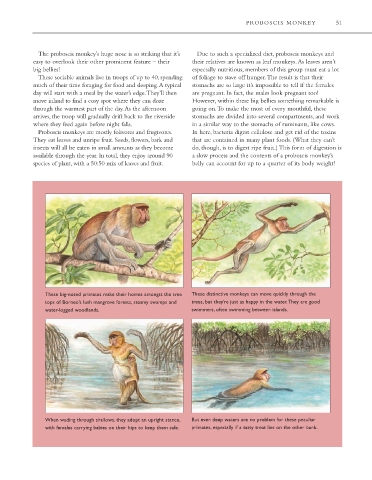
                 These big-nosed primates make their homes amongst the tree  These distinctive monkeys can move quickly through the
                 tops of Borneo’s lush mangrove forests, steamy swamps and  trees, but they’re just as happy in the water.They are good
                 water-logged woodlands.                           swimmers, often swimming between islands.


                 When wading through shallows, they adopt an upright stance,  But even deep waters are no problem for these peculiar
                 with females carrying babies on their hips to keep them safe.  primates, especially if a tasty treat lies on the other bank.


                                             (c) 2011 Marshall Cavendish. All Rights Reserved.

