


Page 26 - (DK Eyewitness) Travel Guide - England's South Coast
P. 26
24 INTRODUCING ENGLAND ’ S SOUTH C O AST
Gardens Through the Ages
Gardens were an integral part of the villas and palaces of
Roman Britain, establishing a pattern of enclosed formal
gardens that continued with the monastic gardens of the
Middle Ages. The Elizabethan knot garden became more
elaborate in Jacobean times, as the range of plants greatly
increased. The 18th century brought a taste for large-scale
“natural” landscapes with lakes, woods and meadows,
creating a distinctively English style. Since then, debate has Grottoes
raged between supporters of natural and formal gardens, Small artificial caves, usually with
an elaborate interior, were used
developing into the eclecticism of the 20th century when to add a touch of romance and
“garden rooms” in differing styles became popular. mystery to 18th-century gardens.
Blackthorn
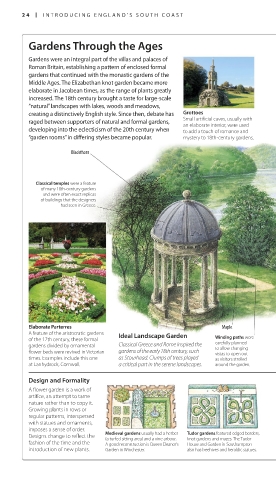
Classical temples were a feature
of many 18th-century gardens
and were often exact replicas
of buildings that the designers
had seen in Greece.
Elaborate Parterres Maple
A feature of the aristocratic gardens Ideal Landscape Garden
of the 17th century, these formal Winding paths were
carefully planned
gardens divided by ornamental Classical Greece and Rome inspired the to allow changing
flower beds were revived in Victorian gardens of the early 18th century, such vistas to open out
times. Examples include this one as Stourhead. Clumps of trees played as visitors strolled
at Lanhydrock, Cornwall. a critical part in the serene landscapes. around the garden.
Design and Formality
A flower garden is a work of
artifice, an attempt to tame
nature rather than to copy it.
Growing plants in rows or
regular patterns, interspersed
with statues and ornaments,
imposes a sense of order. Medieval gardens usually had a herber Tudor gardens featured edged borders,
Designs change to reflect the (a turfed sitting area) and a vine arbour. knot gardens and mazes. The Tudor
fashion of the time and the A good reconstruction is Queen Eleanor’s House and Garden in Southampton
introduction of new plants. Garden in Winchester. also has beehives and heraldic statues.
024-025_EW_ESC.indd 24 10/03/17 6:51 pm

