


Page 29 - (DK Eyewitness) Travel Guide - Sicily
P. 29
A POR TR AIT OF SICIL Y 27
vinti (cycle of the defeated),
which was to have consisted
of five novels; but the author
left the project unfinished.
In the same vein as Verga
were two other Sicilian writers,
Luigi Capuana (1839–1915)
and, more importantly,
Federico De Roberto (1861–
1927), who wrote I Viceré
(The Viceroys, 1894), about
a 19th-century aristocratic
family in Catania.
The literature of Sicily
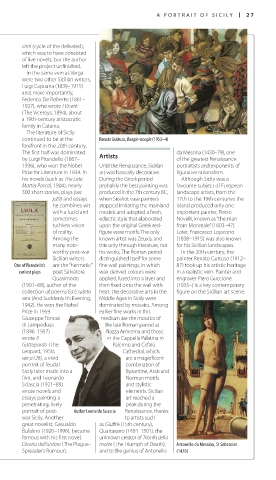
continued to be at the Renato Guttuso, Boogie-woogie (1953–4)
forefront in the 20th century.
The first half was dominated Artists da Messina (1430–79), one
by Luigi Pirandello (1867– of the greatest Renaissance
1936), who won the Nobel Until the Renaissance, Sicilian portraitists and exponents of
Guidebook by Federico Prize for Literature in 1934. In art was basically decorative. figurative rationalism.
De Roberto his novels (such as The Late During the Greek period Although Sicily was a
Mattia Pascal, 1904), nearly probably the best painting was favourite subject of European
300 short stories, plays (see produced in the 7th century BC, landscape artists, from the
p29) and essays when Siceliot vase painters 17th to the 19th centuries the
he combines wit stopped imita ting the mainland island produced only one
with a lucid and models and adopted a fresh, important painter, Pietro
sometimes eclectic style that elaborated Novelli, known as “the man
ruthless vision upon the original Greek red- from Monreale” (1603–47).
of reality. figure ware motifs. The only Later, Francesco Lojacono
Among the known artist was Zeuxis, and (1838–1915) was also known
many note- this only through literature, not for his Sicilian landscapes.
worthy post-war his works. The Roman period In the 20th century, the
Sicilian writers distinguished itself for some painter Renato Guttuso (1912–
One of Pirandello’s are the “hermetic” fine wall paintings, in which 87) took up his artistic heritage
earliest plays poet Salvatore wax-derived colours were in a realistic vein. Painter and
Quasimodo applied, fused into a layer and engraver Piero Guccione
(1901–68), author of the then fixed onto the wall with (1935–) is a key contemporary
collection of poems Ed è subito heat. The decorative arts in the figure on the Sicilian art scene.
sera (And Suddenly it’s Evening, Middle Ages in Sicily were
1942). He won the Nobel dominated by mosaics. Among
Prize in 1959. earlier fine works in this
Giuseppe Tomasi medium are the mosaics of
di Lampedusa the late Roman period at
(1896–1957) Piazza Armerina and those
wrote Il in the Cappella Pala tina in
Gattopardo (The Palermo and Cefalù
Leopard, 1958; Cathedral, which
see p126), a vivid are a magnificent
portrait of feudal combination of
Sicily later made into a Byzantine, Arab and
film, and Leonardo Norman motifs
Sciascia (1921–89) and stylistic
wrote novels and elements. Sicilian
essays painting a art reached a
penetrating, lively peak during the
portrait of post- Author Leonardo Sciascia Renaissance, thanks
war Sicily. Another to artists such
great novelist, Gesualdo as Giuffrè (15th century),
Bufalino (1920–1996), became Quartarano (1484–1501), the
famous with his first novel, unknown creator of Trionfo della
Diceria dell’untore (The Plague- morte (The Triumph of Death), Antonello da Messina, St Sebastian
Spreader’s Rumour). and to the genius of Antonello (1476)
026-027_EW_Sicily.indd 27 11/3/16 2:09 PM

