


Page 233 - The Complete Cat Breed Book (DK)
P. 233
GR OOMING AND HY GIENE            231

         Cleaning ears, eyes, and nose
         The inside of your cat’s ears should be clean and free of odor.
         Remove excess earwax with cotton balls or tissues. If you see
         dark, gritty specks in the ears, which indicate ear mites, or an
         ear discharge, take your cat to the vet. Damp cotton balls can
         also be used to clean around the eyes and nose. Mucus may
         collect in the corners of the eyes of long-muzzled cats, such
         as Siamese. Flat-faced cats, such as Persians, often suffer
         from tear overflow, which leaves mahogany stains on the fur
         around the eyes. Consult your vet if you find any discharge
         from the eyes or nose, or prolonged redness of the eyes.

          TEETH CLEANING
                                ■     Hold the head firmly, pry
                                open the jaws, and clean each
                                tooth for a few seconds.
                                ■     Use a child’s toothbrush or a
                                specially made cat’s toothbrush,
                                some of which fit onto a finger.
                                ■     Special cat toothpastes are
                                available. Your cat will especially
                                enjoy the meat-flavored ones.
                                ■     If your cat won’t allow you to
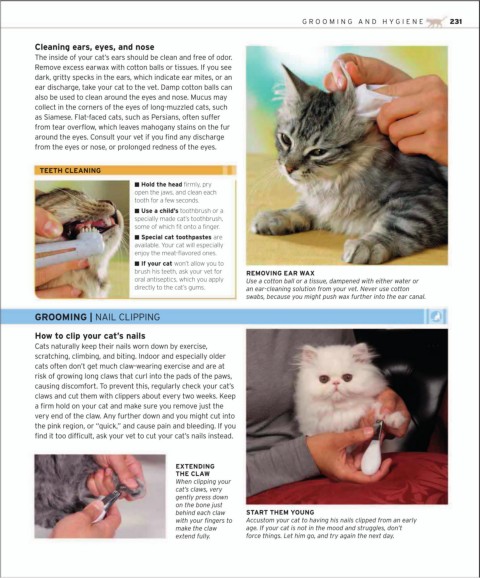
                                brush his teeth, ask your vet for   REMOVING EAR WAX
                                oral antiseptics, which you apply   Use a cotton ball or a tissue, dampened with either water or
                                directly to the cat’s gums.  an ear-cleaning solution from your vet. Never use cotton
                                                          swabs, because you might push wax further into the ear canal.

         GROOMING | NAIL CLIPPING

         How to clip your cat’s nails
         Cats naturally keep their nails worn down by exercise,
         scratching, climbing, and biting. Indoor and especially older
         cats often don’t get much claw-wearing exercise and are at
         risk of growing long claws that curl into the pads of the paws,
         causing discomfort. To prevent this, regularly check your cat’s
         claws and cut them with clippers about every two weeks. Keep
         a firm hold on your cat and make sure you remove just the
         very end of the claw. Any further down and you might cut into
         the pink region, or “quick,” and cause pain and bleeding. If you
         find it too difficult, ask your vet to cut your cat’s nails instead.


                                         EXTENDING
                                         THE CLAW
                                         When clipping your
                                         cat’s claws, very
                                         gently press down
                                         on the bone just
                                         behind each claw   START THEM YOUNG
                                         with your fingers to   Accustom your cat to having his nails clipped from an early
                                         make the claw    age. If your cat is not in the mood and struggles, don’t
                                         extend fully.    force things. Let him go, and try again the next day.

