


Page 100 - (DK) Help Your Kids with Language Arts
P. 100
98 PUNCTU A TION
Other uses SEE ALSO
26–27 Adjectives
of commas 58–59 Conjunctions
70–71 Compound sentences
72–73 Complex sentences
COMMAS CAN BE USED TO JOIN MULTIPLE MAIN CLAUSES, 96–97 Commas
Semicolons 100–101
REPRESENT OMITTED WORDS, AND SEPARATE ITEMS IN LISTS.
Numbers, dates, and time 118–119
Sentences can be joined using a comma with a conjunction to
create the right pace and variety in writing. A comma is also used
to avoid repetition and to separate words or phrases in lists.
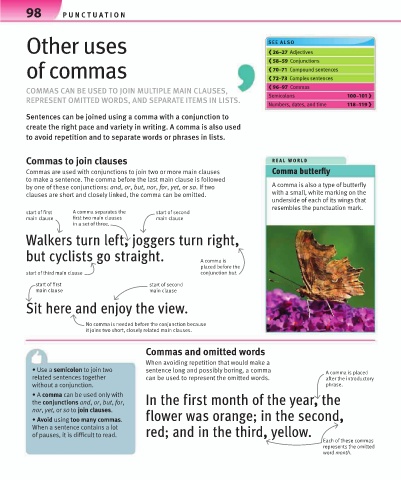
Commas to join clauses REAL W OR L D
Commas are used with conjunctions to join two or more main clauses Comma butterfly
to make a sentence. The comma before the last main clause is followed
by one of these conjunctions: and, or, but, nor, for, yet, or so. If two A comma is also a type of butterfly
clauses are short and closely linked, the comma can be omitted. with a small, white marking on the
underside of each of its wings that
resembles the punctuation mark.
start of first A comma separates the start of second
main clause first two main clauses main clause
in a set of three.
Walkers turn left, joggers turn right,
but cyclists go straight. A comma is
placed before the
start of third main clause conjunction but.
start of first start of second
main clause main clause
Sit here and enjoy the view.
No comma is needed before the conjunction because
it joins two short, closely related main clauses.
Commas and omitted words
When avoiding repetition that would make a
• Use a semicolon to join two sentence long and possibly boring, a comma A comma is placed
related sentences together can be used to represent the omitted words. after the introductory
without a conjunction. phrase.
• A comma can be used only with
the conjunctions and, or, but, for, In the first month of the year, the
nor, yet, or so to join clauses.
• Avoid using too many commas. flower was orange; in the second,
When a sentence contains a lot
of pauses, it is difficult to read. red; and in the third, yellow.
Each of these commas
represents the omitted
word month.

