


Page 11 - Amphibian
P. 11
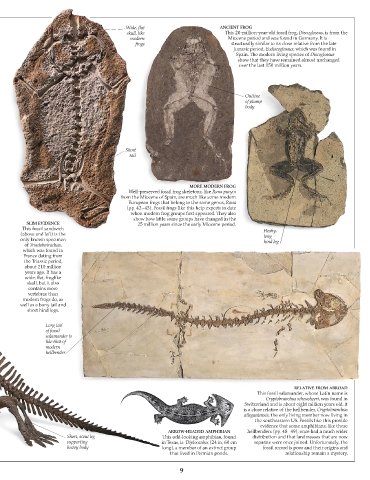
Wide, flat                     ANCIENT FROG
                                           skull, like                      This 20-million-year-old fossil frog, Discoglossus, is from the
                                            modern                           Miocene period and was found in Germany. It is
                                              frogs                           structurally similar to its close relative from the late
                                                                              Jurassic period, Eodiscoglossus, which was found in
                                                                               Spain. The modern living species of Discoglossus
                                                                                show that they have remained almost unchanged
                                                                                over the last 150 million years.


                                                                                  Outline
                                                                                  of plump
                                                                                  body


                                           Short
                                            tail


                                                                MORE MODERN FROG
                                            Well-preserved fossil frog skeletons, like Rana pueyoi
                                         from the Miocene of Spain, are much like some modern
                                            European frogs that belong to the same genus, Rana
                                           (pp. 42–43). Fossil frogs like this help experts to date
                                            when modern frog groups first appeared. They also
                                             show how little some groups have changed in the
          SLIM EVIDENCE                        25 million years since the early Miocene period.
        This fossil sandwich                                                            Fleshy,
        (above and left) is the                                                         long
        only known specimen                                                             hind leg
         of Triadobatrachus,
         which was found in
         France dating from
         the Triassic period,
         about 210 million
         years ago. It has a
         wide, flat, froglike
          skull, but it also
          contains more
          vertebrae than
         modern frogs do, as
        well as a bony tail and
          short hind legs.

                Long tail
                of fossil
                salamander is
                like that of
                modern
                hellbender


                                                                                                  RELATIVE FROM ABROAD
                                                                                      This fossil salamander, whose Latin name is
                                                                                         Cryptobranchus scheuchzeri, was found in
                                                                                  Switzerland and is about eight million years old. It
                                                                                  is a close relative of the hellbender, Cryptobranchus
                                                                                  alleganiensis, the only living member now living in
                                                                                     the southeastern US. Fossils like this provide
                                                                                       evidence that some amphibians, like these
                                                         ARROW-HEADED AMPHIBIAN    hellbenders (pp. 48–49), once had a much wider
                       Short, stout leg                This odd-looking amphibian, found   distribution and that landmasses that are now
                       supporting                      in Texas, is  Diplocaulus (24 in, 60 cm   separate were once joined. Unfortunately, the
                       heavy body                      long), a member of an extinct group   fossil record is poor and their origins and
                                                         that lived in Permian ponds.          relationship remain a mystery.

