


Page 66 - Complete Cat Care: How To Keep Your Cat Healthy and Happy
P. 66
Infectious diseases


            Your cat may catch infectious diseases from the environment or from
            other cats. These diseases can be serious, especially in old cats or
            kittens, but vaccination can help protect your pet.

            Feline panleukopenia            FHV and FCV                    Chlamydophila felis
            This disease, caused by feline   Feline herpes virus (FHV) and   The bacterium Chlamydophila
            parvovirus, is also called      feline calicivirus (FCV) cause up    felis mainly causes conjunctivitis
            feline infectious enteritis or feline   to 90 percent of upper respiratory   (see p.48), with sore, inflamed
            distemper. It easily spreads between   infections, or “cat flu” (see p.58).   inner eyelids, and excess tears.
            cats or is picked up from the   Infected cats may spread the virus   It can also cause mild cat flu. It
            environment. The virus attacks    by sneezing, coughing, or licking   is passed on by direct contact
            the white blood cells, weakening   objects or other cats. Even when   and most often affects kittens
            the immune system. It causes    they have recovered from the    or unvaccinated adults living
            gastroenteritis, resulting in fever,   flu, cats may still carry the virus   in groups. Vets treat the infection
            pain when drinking, vomiting or   and pass it to others. They are   with antibiotics. They may advise
            diarrhea, dehydration, and possibly   especially likely to share the   vaccination for cats living in groups.
            death. If kittens are infected just   herpes virus when ill or stressed.
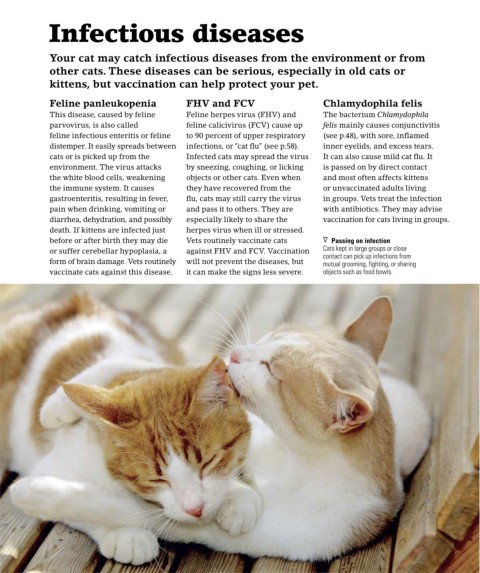
            before or after birth they may die   Vets routinely vaccinate cats   ▽  Passing on infection
            or suffer cerebellar hypoplasia, a   against FHV and FCV. Vaccination   Cats kept in large groups or close
                                                                           contact can pick up infections from
            form of brain damage. Vets routinely   will not prevent the diseases, but    mutual grooming, fighting, or sharing
            vaccinate cats against this disease.  it can make the signs less severe.  objects such as food bowls.


   US_064-065_Infectious_diseases.indd   64                                                          24/10/2013   15:05

