


Page 67 - Complete Cat Care: How To Keep Your Cat Healthy and Happy
P. 67
FeLV
        A potentially deadly virus, feline
        leukemia virus (FeLV) is shed
        in saliva, other body fluids, and
        feces. Pregnant or nursing cats can
        pass it to their kittens. Some cats
        may overcome the virus, but
        it may take hold in kittens or in
        cats that are already sick. The
        virus attacks the immune system,
        destroying white blood cells, and
        may cause lymphoma (see p.63)
        or leukemia. It may also destroy
        developing red blood cells, causing
        anemia (see p.59). Infected cats
        die within a few years. Vets may
        carry out blood tests to identify                                                                65
        FeLV. Cats at risk of infection
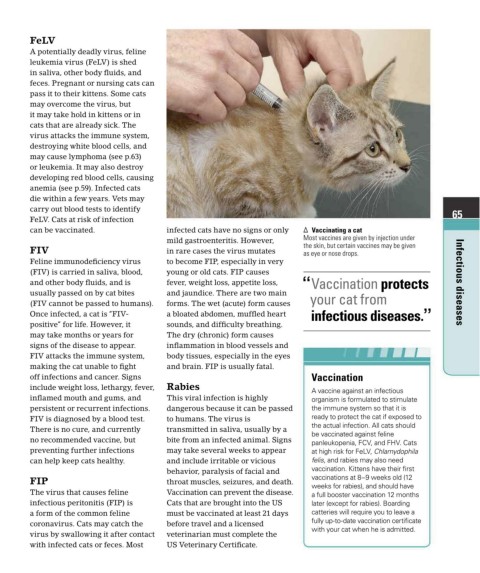
        can be vaccinated.             infected cats have no signs or only   △  Vaccinating a cat
                                       mild gastroenteritis. However,    Most vaccines are given by injection under
        FIV                            in rare cases the virus mutates    the skin, but certain vaccines may be given
                                                                       as eye or nose drops.
        Feline immunodeficiency virus   to become FIP, especially in very
        (FIV) is carried in saliva, blood,   young or old cats. FIP causes
        and other body fluids, and is   fever, weight loss, appetite loss,    “Vaccination protects       Infectious diseases
        usually passed on by cat bites    and jaundice. There are two main   your cat from
        (FIV cannot be passed to humans).   forms. The wet (acute) form causes
        Once infected, a cat is “FIV-  a bloated abdomen, muffled heart   infectious diseases.”
        positive” for life. However, it    sounds, and difficulty breathing.
        may take months or years for    The dry (chronic) form causes
        signs of the disease to appear.    inflammation in blood vessels and
        FIV attacks the immune system,   body tissues, especially in the eyes
        making the cat unable to fight    and brain. FIP is usually fatal.
        off infections and cancer. Signs                                 Vaccination
        include weight loss, lethargy, fever,   Rabies                   A vaccine against an infectious
        inflamed mouth and gums, and   This viral infection is highly    organism is formulated to stimulate
        persistent or recurrent infections.   dangerous because it can be passed   the immune system so that it is
        FIV is diagnosed by a blood test.   to humans. The virus is      ready to protect the cat if exposed to
        There is no cure, and currently    transmitted in saliva, usually by a   the actual infection. All cats should
                                                                         be vaccinated against feline
        no recommended vaccine, but    bite from an infected animal. Signs   panleukopenia, FCV, and FHV. Cats
        preventing further infections    may take several weeks to appear   at high risk for FeLV, Chlamydophila
        can help keep cats healthy.    and include irritable or vicious   felis, and rabies may also need
                                       behavior, paralysis of facial and   vaccination. Kittens have their first
        FIP                            throat muscles, seizures, and death.   vaccinations at 8–9 weeks old (12
        The virus that causes feline   Vaccination can prevent the disease.   weeks for rabies), and should have
                                                                         a full booster vaccination 12 months
        infectious peritonitis (FIP) is    Cats that are brought into the US   later (except for rabies). Boarding
        a form of the common feline    must be vaccinated at least 21 days   catteries will require you to leave a
        coronavirus. Cats may catch the   before travel and a licensed   fully up-to-date vaccination certificate
        virus by swallowing it after contact   veterinarian must complete the    with your cat when he is admitted.
        with infected cats or feces. Most   US Veterinary Certificate.


   US_064-065_Infectious_diseases.indd   65                                                          24/10/2013   15:05

