


Page 54 - Shark
P. 54
In the cage and out


                           Diving with large predatory
                           sharks can be dangerous, so
                           people who want to get close
                           to sharks, like underwater
                           photographers and film
                           makers, use a strong metal
                           cage to protect themselves.
                           No one sensible would want
           Diving suit     to be in the water with a great
            In the early
         19th century, divers   white shark (pp. 28–31),
        wore heavy helmets or
         hard hats and had air   unless protected by a cage.
         pumped down tubes   For smaller and less dangerous
         from the surface. Tall
         tales were often told   species, like blue sharks
         about attacks from   (pp. 56–57), divers sometimes
          giant octopuses.
                           wear chain-mail suits. The
        chain-mail is sufficiently strong to prevent the
        shark’s teeth from penetrating the skin if it
        should bite, but bruising can still occur. Divers
        may also have a cage just to retreat into, should
        the sharks become aggressive. Because chum
        (pp. 28–29) and baits are put in the water to
        attract sharks, they may become excited by the
        thought of food and snap at the divers. When
        sharks are being filmed or photographed
        outside a cage, safety divers should also
               be present to keep watch for sharks
                approaching from outside the
                  filmmaker’s field of vision.


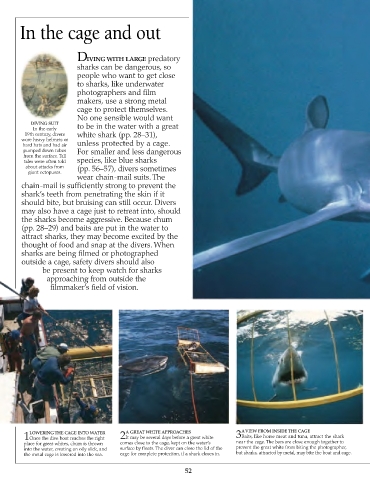
           Lowering the cage into water    a great white approaches              a view from insiDe the cage
         1Once the dive boat reaches the right   2It may be several days before a great white   3Baits, like horse meat and tuna, attract the shark
         place for great whites, chum is thrown   comes close to the cage, kept on the water’s    near the cage. The bars are close enough together to
         into the water, creating an oily slick, and   surface by floats. The diver can close the lid of the   prevent the great white from biting the photographer,
         the metal cage is lowered into the sea.  cage for complete protection, if a shark closes in.  but sharks, attracted by metal, may bite the boat and cage.

                                                              52

