


Page 57 - Shark
P. 57
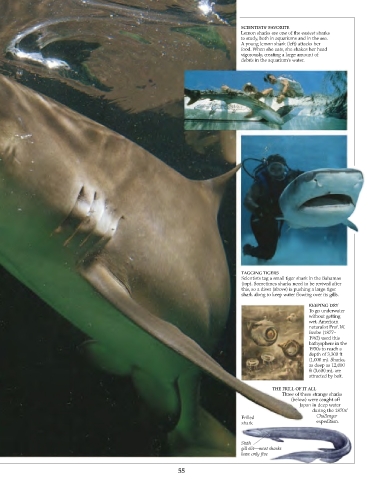
ScientiStS’ favorite
                                                                                 Lemon sharks are one of the easiest sharks
                                                                                 to study, both in aquariums and in the sea.
                                                                                 A young lemon shark (left) attacks her
                                                                                 food. When she eats, she shakes her head
                                                                                 vigorously, creating a large amount of
                                                                                 debris in the aquarium’s water.


                                                                                 tagging tigerS
                                                                                 Scientists tag a small tiger shark in the Bahamas
                                                                                 (top). Sometimes sharks need to be revived after
                                                                                 this, so a diver (above) is pushing a large tiger
                                                                                 shark along to keep water flowing over its gills.

                                                                                                       keeping dry
                                                                                                       To go underwater
                                                                                                       without getting
                                                                                                       wet, American
                                                                                                       naturalist Prof. W.
                                                                                                       Beebe (1877–
                                                                                                       1962) used this
                                                                                                       bathysphere in the
                                                                                                       1930s to reach a
                                                                                                       depth of 3,300 ft
                                                                                                       (1,000 m). Sharks,
                                                                                                       as deep as 12,000
                                                                                                       ft (3,600 m), are
                                                                                                       attracted by bait.

                                                                                           the frill of it all
                                                                                              Three of these strange sharks
                                                                                                 (below) were caught off
                                                                                                    Japan in deep water
                                                                                                        during the 1870s’
                                                                                 Frilled                  challenger
                                                                                 shark                    expedition.


                                                                                 Sixth
                                                                                 gill slit—most sharks
                                                                                 have only five

                                                            55

