


Page 90 - History of War - Issue 25-16
P. 90
OPERATOR’S HANDBOOK


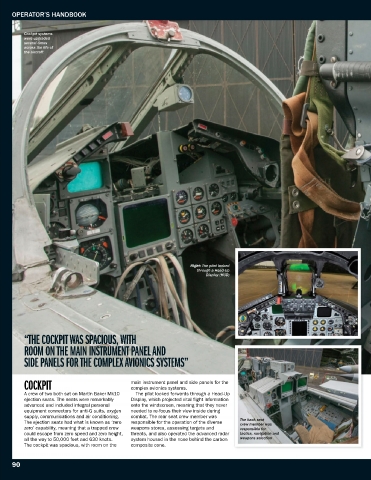
          Cockpit systems
          were upgraded
          several times
          across the life of
          the aircraft


                                                                    Right: The pilot looked
                                                                      through a Head-Up
                                                                         Display (HUD)


          “THECOCKPITWASSPACIOUS,WITH

          ROOMONTHEMAININSTRUMENTPANELAND
          SIDEPANELSFORTHECOMPLEXAVIONICSSYSTEMS”


          COCKPIT                              main instrument panel and side panels for the
                                               complex avionics systems.
          A crew of two both sat on Martin Baker Mk10  The pilot looked forwards through a Head-Up
          ejection seats. The seats were remarkably  Display, which projected vital light information
          advanced and included integral personal  onto the windscreen, meaning that they never
          equipment connectors for anti-G suits, oxygen  needed to re-focus their view inside during
          supply, communications and air conditioning.  combat. The rear seat crew member was
                                                                                     The back seat
          The ejection seats had what is known as ‘zero  responsible for the operation of the diverse
                                                                                     crew member was
          zero’ capability, meaning that a trapped crew  weapons stores, assessing targets and  responsible for
          could escape from zero speed and zero height,  threats, and also operated the advanced radar  tactics, navigation and
          all the way to 50,000 feet and 630 knots.  system housed in the nose behind the carbon  weapons selection
          The cockpit was spacious, with room on the  composite cone.

     90

