


Page 147 - (DK Eyewitness) Travel Guide - India
P. 147
LAD AKH , JA MMU & K ASHMIR 145
Buddhist Iconography
The external manifestations of Buddhism are ubiquitous in Leh district and Zanskar –
prayer flags fluttering in the breeze, prayer wheels turning in the hands of the elderly,
chortens and mani walls inset with stone slabs carved with the sacred invocation
Om mani padme hum (“Hail to the Jewel in the Lotus”). Inside the monasteries, the
iconography is more complex. Each divinity of the Mahayana Buddhist pantheon
is depicted in several different manifestations, together with a host of saints, teachers
and mythical figures, mandalas and allegorical compositions. Shown below are
some images that are encountered most frequently.
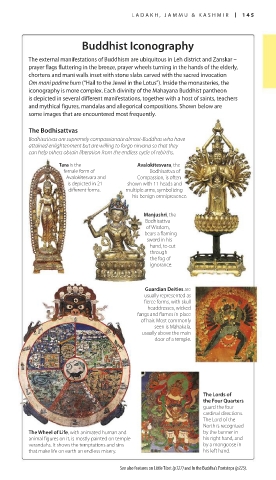
The Bodhisattvas
Bodhisattvas are supremely compassionate almost-Buddhas who have
attained enlightenment but are willing to forgo nirvana so that they
can help others obtain liberation from the endless cycle of rebirths.
Tara is the Avalokitesvara, the
female form of Bodhisattva of
Avalokitesvara and Compassion, is often
is depicted in 21 shown with 11 heads and
different forms. multiple arms, symbolizing
his benign omnipresence.
Manjushri, the
Bodhisattva
of Wisdom,
bears a flaming
sword in his
hand, to cut
through
the fog of
ignorance.
Guardian Deities are
usually represented as
fierce forms, with skull
headdresses, wicked
fangs and flames in place
of hair. Most commonly
seen is Mahakala,
usually above the main
door of a temple.
The Lords of
the Four Quarters
guard the four
cardinal directions.
The Lord of the
North is recognized
The Wheel of Life, with animated human and by the banner in
animal figures on it, is mostly painted on temple his right hand, and
verandahs. It shows the temptations and sins by a mongoose in
that make life on earth an endless misery. his left hand.
See also features on Little Tibet (p127) and In the Buddha’s Footsteps (p225).
144-145_EW_India.Indd 145 26/04/17 11:43 am

