


Page 56 - (DK Eyewitness) Travel Guide - India
P. 56
54 INTRODUCING INDIA
The Great Mughals
The Mughals, like their contemporaries the Ottomans
of Turkey, the Safavids of Iran and the Tudors of England,
were a powerful and influential dynasty. They ruled
India for over 300 years, their empire extending at its
height from Kandahar in the northwest to Bengal in the
east, and from Kashmir in the north to the Deccan in
the south. Great patrons of literature, architecture, and
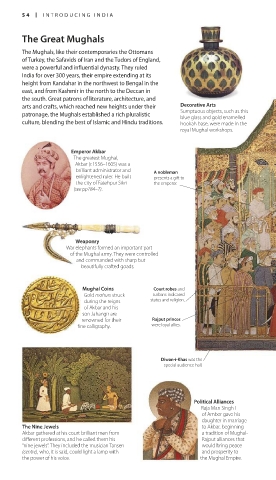
arts and crafts, which reached new heights under their Decorative Arts
patronage, the Mughals established a rich pluralistic Sumptuous objects, such as this
blue glass and gold enamelled
culture, blending the best of Islamic and Hindu traditions. hookah base, were made in the
royal Mughal workshops.
Emperor Akbar
The greatest Mughal,
Akbar (r.1556–1605) was a
brilliant administrator and A nobleman
enlightened ruler. He built presents a gift to
the city of Fatehpur Sikri the emperor.
(see pp184–7).
Weaponry
War elephants formed an important part
of the Mughal army. They were controlled
and commanded with sharp but
beautifully crafted goads.
Mughal Coins Court robes and
Gold mohurs struck turbans indicated
during the reigns status and religion.
of Akbar and his
son Jahangir are
renowned for their Rajput princes
fine calligraphy. were loyal allies.
Diwan-i-Khas was the
special audience hall.
Political Alliances
Raja Man Singh I
of Amber gave his
daughter in marriage
The Nine Jewels to Akbar, beginning
Akbar gathered at his court brilliant men from a tradition of Mughal-
different professions, and he called them his Rajput alliances that
“nine jewels”. They included the musician Tansen would bring peace
(centre), who, it is said, could light a lamp with and prosperity to
the power of his voice. the Mughal Empire.
054-055_EW_India.indd 54 26/04/17 11:42 am

