


Page 166 - (DK Eyewitness) Travel Guide: Japan
P. 166
164 JAP AN REGION B Y REGION
6 Nijo Castle
Nijo-jo Reception Halls
With few of the grand fortifications of other castles in Japan,
Nijo is instead best known for its unusually ornate interiors
and so-called nightingale floors. The latter were designed
to make bird-like squeaking sounds when walked upon, a
warning of possible intruders. The complex was created by
Shogun Tokugawa Ieyasu (1543–1616), and symbolized the
power and riches of the newly established Edo-based
shogunate. Ieyasu’s grandson Iemitsu commis sioned the best
Kano School painters for the reception halls, in preparation for
an imperial visit. Ironically, in 1867 the last Tokugawa shogun
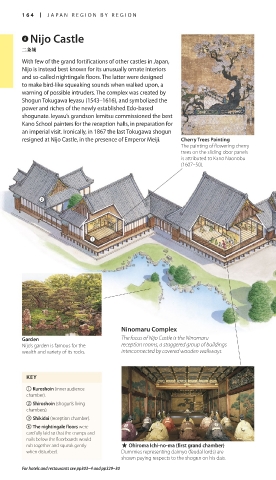
resigned at Nijo Castle, in the presence of Emperor Meiji. Cherry Trees Painting
The painting of flowering cherry
trees on the sliding door panels
is attributed to Kano Naonobu
(1607–50).
Ninomaru Complex
Garden The focus of Nijo Castle is the Ninomaru
Nijo’s garden is famous for the reception rooms, a staggered group of buildings
wealth and variety of its rocks. interconnected by covered wooden walkways.
KEY
1 Kuroshoin (inner audience
chamber).
2 Shiroshoin (shogun’s living
chambers).
3 Shikidai (reception chamber).
4 The nightingale floors were
carefully laid so that the cramps and
nails below the floorboards would
rub together and squeak gently ¬ Ohiroma Ichi-no-ma (first grand chamber)
when disturbed. Dummies representing daimyo (feudal lords) are
shown paying respects to the shogun on his dais.
For hotels and restaurants see pp303–4 and pp329–30
164-165_EW_Japan.indd 164 08/08/16 3:07 pm
Eyewitness Travel LAYERS PRINTED:
Starsight template “UK” LAYER
(Source v2.7)
Date 24th April 2013
Size 125mm x 217mm

