


Page 310 - (DK Eyewitness) Travel Guide: Japan
P. 310
308 TR A VELERS ’ NEEDS
WHERE TO EAT AND DRINK
Considering the country’s present profusion appetizing. Tokyo, Osaka, and Kyoto are
of restaurants (about 90,000 in Tokyo alone) the celebrated culinary centers, but each
and its wealth of regional and foreign town takes pride in its specialties. Budget
cuisines, it is hard to believe that for centuries and mid-range restaurants can often be
the average Japanese diet consisted of little found clustered around train stations, in
more than rice or millet, miso soup, and malls, and taking up whole floors of
pickles. In a land of limited resources austerity department stores. Many eateries can
was the rule, but it taught the Japanese to be identified by the half-curtains (noren)
make the most of seasonal foods, and above the door, with the name of the
to serve them artfully so that a little looked restaurant written on them in Japanese.
rural areas, few restaurants may perfumes or colognes if dining
be open after 7pm, because at a kaiseki restaurant or
most visitors will be dining at participating in a tea ceremony.
their ryokan.
Set Menus and Teishoku
Reservations and Budget restaurants often have
Dress Code
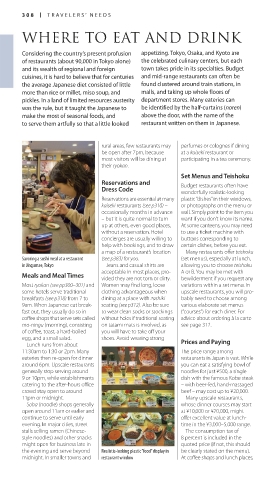
wonderfully realisticlooking
Reservations are essential at many plastic “dishes” in their windows,
kaiseki restaurants (see p310) – or photographs on the menu or
occasionally months in advance wall. Simply point to the item you
– but it is quite normal to turn want if you don’t know its name.
up at others, even good places, At some canteens, you may need
without a reservation. Hotel to use a ticket machine with
concierges are usually willing to buttons corresponding to
help with bookings, and to draw certain dishes, before you eat.
a map of a restaurant’s location Many restaurants offer teishoku
Savoring a sushi meal at a restaurant (see p383) for you. (set menus), especially at lunch,
in Jingumae, Tokyo Jeans and casual shirts are allowing you to choose teishoku
acceptable in most places, pro A or B. You may be met with
Meals and Meal Times vided they are not torn or dirty. bewilderment if you request any
Most ryokan (see pp300–301) and Women may find long, loose variations within a set menu. In
some hotels serve traditional clothing advantageous when upscale restaurants, you will pro
breakfasts (see p318) from 7 to dining at a place with zashiki bably need to choose among
9am. When Japanese eat break seating (see p312). Also be sure various elaborate set menus
fast out, they usually do so in to wear clean socks or stockings (“courses”) for each diner. For
coffee shops that serve sets called without holes if traditional seating advice about ordering à la carte
mo-ningu (morning), consisting on tatami mats is involved, as see page 312.
of coffee, toast, a hardboiled you will have to take off your
egg, and a small salad. shoes. Avoid wearing strong Prices and Paying
Lunch runs from about
11:30am to 1:30 or 2pm. Many The price range among
eateries then reopen for dinner restaurants in Japan is vast. While
around 6pm. Upscale restaurants you can eat a satisfying bowl of
generally stop serving around noodles for just ¥500, a single
9 or 10pm, while establishments dish with the famous Kobe steak
catering to the afterhours office – with beerfed, handmassaged
crowd stay open to around beef – may cost up to ¥20,000.
11pm or midnight. Many upscale restaurants,
Soba (noodle) shops generally whose dinner courses may start
open around 11am or earlier and at ¥10,000 or ¥20,000, might
continue to serve until early offer excellent value at lunch
evening. In major cities, street time in the ¥3,000–5,000 range.
stalls selling ramen (Chinese The consumption tax of
style noodles) and other snacks 8 percent is included in the
might open for business late in quoted price (if not, this should
the evening and serve beyond Realistic-looking plastic “food” display in be clearly stated on the menu).
midnight. In smaller towns and restaurant window At coffee shops and lunch places,
308-309_EW_Japan.indd 308 08/08/16 3:09 pm
Eyewitness Travel LAYERS PRINTED:
Practical template “UK” LAYER
(Source v1.8)
Date 15th May 2013
Size 125mm x 217mm

