


Page 312 - (DK Eyewitness) Travel Guide: Japan
P. 312
310 TR A VELERS ’ NEEDS
Types of Restaurants and Bars Nomiya and Aka-Chochin
Tavern-like nomiya (literally
Japan has a restaurant to suit every taste and budget, “drink shop”) and aka-chochin
from hole-in-the-wall noodle stands to havens of haute are pro letariat versions of the
cuisine called ryotei. If you have difficulty distinguishing restaurants described above.
between different types, stick to restaurants with a menu The aka-chochin, or “red-lantern
restaurant,” is named after the
and prices posted outside near the door. Lanterns mark bright lantern often hanging
out restaurants by name or description, though in some over the door (but note that
places they may bear the name of a district or event. not all red lanterns denote a
“red-lantern restaurant”). They
rarely have menus, the shop’s
offerings being written on
strips of wood attached to the
wall or hand written on a
blackboard. They tend to be
frequented almost entirely by
locals and, to confuse matters,
are very often still called
izakaya. To complicate matters
further, nomiya can also be
used to describe expensive
drinking places like hostess
bars, although in this guide
the term refers only to the
tavern-like incarnation.
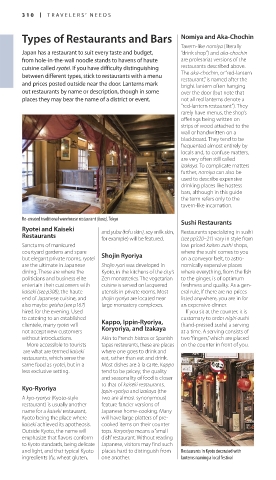
Re-created traditional warehouse restaurant (kura), Tokyo
Sushi Restaurants
Ryotei and Kaiseki and yuba (tofu skin), soy-milk skin, Restaurants specializing in sushi
Restaurants for example) will be featured. (see pp320–21) vary in style from
Sanctums of manicured low-priced kaiten-zushi shops,
courtyard gardens and spare where the sushi comes to you
but elegant private rooms, ryotei Shojin Ryoriya on a conveyor belt, to astro-
are the ultimate in Japanese Shojin ryori was developed in nomically expensive places
dining. These are where the Kyoto, in the kitchens of the city’s where everything, from the fish
politicians and business elite Zen monasteries. The vegetarian to the ginger, is of optimum
entertain their customers with cuisine is served on lacquered freshness and quality. As a gen-
kaiseki (see p308), the haute utensils in private rooms. Most eral rule, if there are no prices
end of Japanese cuisine, and shojin ryoriya are located near listed anywhere, you are in for
also maybe geisha (see p167) large monastery complexes. an expensive dinner.
hired for the evening. Used If you sit at the counter, it is
to catering to an established customary to order nigiri-zushi
clientele, many ryotei will Kappo, Ippin-Ryoriya, (hand-pressed sushi) a serving
Koryoriya, and Izakaya
not accept new customers at a time. A serving consists of
without introductions. Akin to French bistros or Spanish two “fingers,” which are placed
More accessible to tourists tapas restaurants, these are places on the counter in front of you.
are what are termed kaiseki where one goes to drink and
restaurants, which serve the eat, rather than eat and drink.
same food as ryotei, but in a Most dishes are à la carte. Kappo
less exclusive setting. tend to be pricey; the quality
and seasonality of food is closer
to that of kaiseki restaurants.
Kyo-Ryoriya
Ippin-ryoriya and izakaya (the
A kyo-ryoriya (Kyoto-style two are almost synonymous)
restaurant) is usually another feature fancier versions of
name for a kaiseki restaurant, Japanese home-cooking. Many
Kyoto being the place where will have large platters of pre-
kaiseki achieved its apotheosis. cooked items on their counter
Outside Kyoto, the name will tops. Koryoriya means a “small
emphasize that flavors conform dish” restaurant. Without reading
to Kyoto standards, being deli cate Japanese, visitors may find such
and light, and that typical Kyoto places hard to distinguish from Restaurants in Kyoto decorated with
ingredients (fu, wheat gluten, one another. lanterns naming a local festival
310-311_EW_Japan.indd 310 08/08/16 3:09 pm
Eyewitness Travel LAYERS PRINTED:
Practical template “UK” LAYER
(Source v1.7)
Date 5th March 2013
Size 125mm x 217mm

