


Page 311 - (DK Eyewitness) Travel Guide: Japan
P. 311
WHERE T O EA T AND DRINK 309
the bill is usually automatically
placed on your table, and you
should take it to the cashier to
pay. Even if you have exact
change, do not leave it on the
table and walk out.
At bars and certain restaurants
you have to ask for the bill. The
amount, written on a slip of
paper, will generally be pre
sented to you on a small tray. You
place the money or your credit
card on this tray, and your receipt
or any change will be returned
on the same tray. Tipping is not
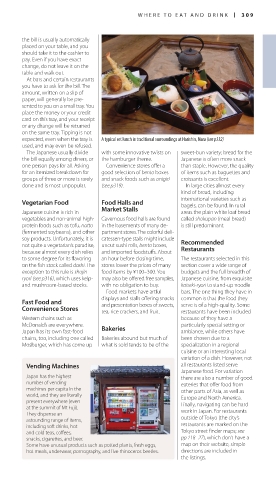
expected, even when the tray is A typical set lunch in traditional surroundings at Harishin, Nara (see p332)
used, and may even be refused.
The Japanese usually divide with some innovative twists on sweetbun variety; bread for the
the bill equally among diners, or the hamburger theme. Japanese is often more snack
one person pays for all. Asking Convenience stores offer a than staple. However, the quality
for an itemized break down for good selection of bento boxes of items such as baguettes and
groups of three or more is rarely and snack foods such as onigiri croissants is excellent.
done and is most unpopular. (see p319). In large cities almost every
kind of bread, including
international varieties such as
Vegetarian Food Food Halls and bagels, can be found. In rural
Market Stalls
Japanese cuisine is rich in areas the plain white loaf bread
vegetables and nonanimal high Cavernous food halls are found called shokupan (meal bread)
protein foods such as tofu, natto in the basements of many de is still predominant.
(fermented soy beans), and other part ment stores. The colorful deli
soy products. Unfortunately, it is catessentype stalls might include
not quite a vegetarian’s paradise, uncut sushi rolls, bento boxes, Recommended
Restaurants
because almost every dish relies and imported foodstuffs. About
to some degree for its flavoring an hour before closing time, The restaurants selected in this
on the fish stock called dashi. The stores lower the prices of many section cover a wide range of
exception to this rule is shojin food items by ¥100–300. You budgets and the full breadth of
ryori (see p316), which uses kelp may also be offered free samples, Japanese cuisine, from exquisite
and mushroombased stocks. with no obligation to buy. kaiseki-ryori to standup noodle
Food markets have artful bars. The one thing they have in
displays and stalls offering snacks common is that the food they
Fast Food and and presentation boxes of sweets, serve is of a highquality. Some
Convenience Stores
tea, rice crackers, and fruit. restaurants have been included
Western chains such as because of they have a
McDonald’s are everywhere. Bakeries particularly special setting or
Japan has its own fastfood ambiance, while others have
chains, too, including one called Bakeries abound but much of been chosen due to a
Mosburger, which has come up what is sold tends to be of the specialization in a regional
cuisine or an interesting local
variation of a dish. However, not
Vending Machines all restaurants listed serve
Japanese food. For variation
Japan has the highest there are also a number of good
number of vending eateries that offer food from
machines per capita in the other parts of Asia, as well as
world, and they are literally Europe and North America.
present everywhere (even Finally, navigating can be hard
at the summit of Mt Fuji). work in Japan. For restaurants
They dispense an
astounding range of items, outside of Tokyo (the city’s
including soft drinks, hot restaurants are marked on the
and cold teas, coffees, Tokyo street finder maps; see
snacks, cigarettes, and beer. pp 118–27), which don’t have a
Some have unusual products such as potted plants, fresh eggs, map on their website, simple
hot meals, underwear, pornography, and live rhinoceros beetles. directions are included in
the listings.
308-309_EW_Japan.indd 309 08/08/16 3:09 pm

