


Page 178 - Applied Statistics with R
P. 178
178                   CHAPTER 9. MULTIPLE LINEAR REGRESSION


                                 beta_0 = 5
                                 beta_1 = -2
                                 beta_2 = 6
                                 sigma  = 4


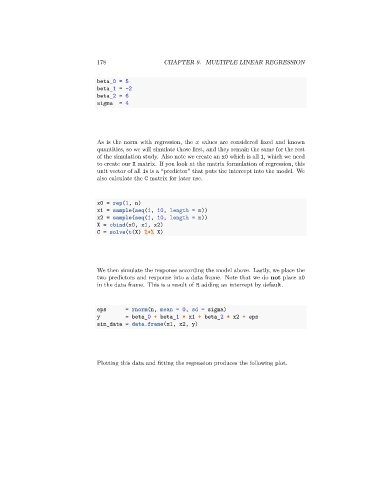
                                 As is the norm with regression, the    values are considered fixed and known
                                 quantities, so we will simulate those first, and they remain the same for the rest
                                 of the simulation study. Also note we create an x0 which is all 1, which we need
                                 to create our X matrix. If you look at the matrix formulation of regression, this
                                 unit vector of all 1s is a “predictor” that puts the intercept into the model. We
                                 also calculate the C matrix for later use.


                                 x0 = rep(1, n)
                                 x1 = sample(seq(1, 10, length = n))
                                 x2 = sample(seq(1, 10, length = n))
                                 X = cbind(x0, x1, x2)
                                 C = solve(t(X) %*% X)


                                 We then simulate the response according the model above. Lastly, we place the
                                 two predictors and response into a data frame. Note that we do not place x0
                                 in the data frame. This is a result of R adding an intercept by default.


                                 eps       = rnorm(n, mean = 0, sd = sigma)
                                 y         = beta_0 + beta_1 * x1 + beta_2 * x2 + eps
                                 sim_data = data.frame(x1, x2, y)


                                 Plotting this data and fitting the regression produces the following plot.

