


Page 396 - First Aid for the USMLE Step 1 2020, Thirtieth edition [MedicalBooksVN.com]_Neat
P. 396
352 SEcTion iii EndocrinE ` endocrine—PhArmAcology EndocrinE ` endocrine—PhArmAcology
Carcinoid syndrome Carcinoid tumors arise from neuroendocrine cells most commonly in the intestine or lung. Rare
and does not occur if tumor is limited to the GI tract.
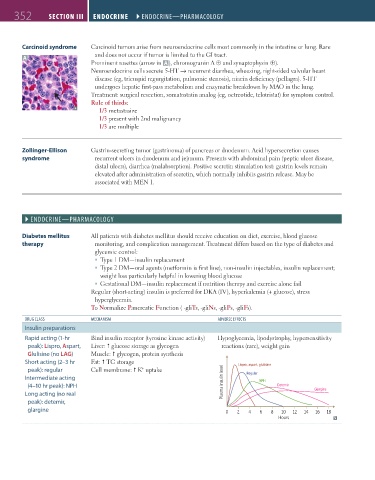
A
Prominent rosettes (arrow in A ), chromogranin A ⊕ and synaptophysin ⊕).
Neuroendocrine cells secrete 5-HT → recurrent diarrhea, wheezing, right-sided valvular heart
disease (eg, tricuspid regurgitation, pulmonic stenosis), niacin deficiency (pellagra). 5-HT
undergoes hepatic first-pass metabolism and enzymatic breakdown by MAO in the lung.
Treatment: surgical resection, somatostatin analog (eg, octreotide, telotristat) for symptom control.
Rule of thirds:
1/3 metastasize
1/3 present with 2nd malignancy
1/3 are multiple
Zollinger-Ellison Gastrin-secreting tumor (gastrinoma) of pancreas or duodenum. Acid hypersecretion causes
syndrome recurrent ulcers in duodenum and jejunum. Presents with abdominal pain (peptic ulcer disease,
distal ulcers), diarrhea (malabsorption). Positive secretin stimulation test: gastrin levels remain
elevated after administration of secretin, which normally inhibits gastrin release. May be
associated with MEN 1.
` endocrine—PhArmAcology
Diabetes mellitus All patients with diabetes mellitus should receive education on diet, exercise, blood glucose
therapy monitoring, and complication management. Treatment differs based on the type of diabetes and
glycemic control:
Type 1 DM—insulin replacement
Type 2 DM—oral agents (metformin is first line), non-insulin injectables, insulin replacement;
weight loss particularly helpful in lowering blood glucose
Gestational DM—insulin replacement if nutrition therapy and exercise alone fail
Regular (short-acting) insulin is preferred for DKA (IV), hyperkalemia (+ glucose), stress
hyperglycemia.
To Normalize Pancreatic Function ( -gliTs, -gliNs, -gliPs, -gliFs).
drUg clAss mechAnism AdVerse eFFects
Insulin preparations
Rapid acting (1-hr Bind insulin receptor (tyrosine kinase activity) Hypoglycemia, lipodystrophy, hypersensitivity
peak): Lispro, Aspart, Liver: glucose storage as glycogen reactions (rare), weight gain
Glulisine (no LAG) Muscle: glycogen, protein synthesis
Short acting (2–3 hr Fat: TG storage Lispro, aspart, glulisine
+
peak): regular Cell membrane: K uptake
Intermediate acting Regular NPH
(4–10 hr peak): NPH Plasma insulin level Detemir
Long acting (no real Glargine
peak): detemir,
glargine 0 2 4 6 8 10 12 14 16 18
Hours
FAS1_2019_08-Endocrine.indd 352 11/7/19 4:30 PM

