


Page 391 - First Aid for the USMLE Step 1 2020, Thirtieth edition [MedicalBooksVN.com]_Neat
P. 391
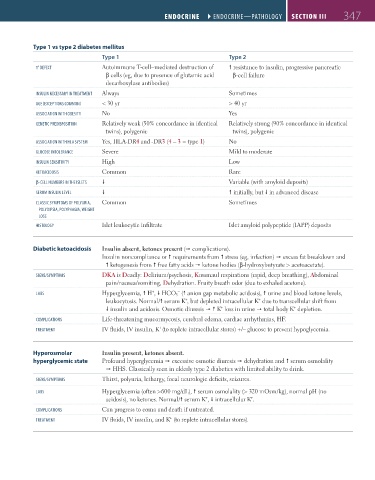
EndocrinE ` endocrine—PAthology EndocrinE ` endocrine—PAthology SEcTion iii 347
Type 1 vs type 2 diabetes mellitus
Type 1 Type 2
1° deFect Autoimmune T-cell–mediated destruction of resistance to insulin, progressive pancreatic
β cells (eg, due to presence of glutamic acid β-cell failure
decarboxylase antibodies)
insUlin necessAry in treAtment Always Sometimes
Age (eXcePtions common) < 30 yr > 40 yr
AssociAtion With obesity No Yes
genetic PredisPosition Relatively weak (50% concordance in identical Relatively strong (90% concordance in identical
twins), polygenic twins), polygenic
AssociAtion With hlA system Yes, HLA-DR4 and -DR3 (4 – 3 = type 1) No
glUcose intolerAnce Severe Mild to moderate
insUlin sensitiVity High Low
KetoAcidosis Common Rare
β-cell nUmbers in the islets Variable (with amyloid deposits)
serUm insUlin leVel initially, but in advanced disease
clAssic symPtoms oF PolyUriA, Common Sometimes
PolydiPsiA, PolyPhAgiA, Weight
loss
histology Islet leukocytic infiltrate Islet amyloid polypeptide (IAPP) deposits
Diabetic ketoacidosis Insulin absent, ketones present ( complications).
Insulin noncompliance or requirements from stress (eg, infection) excess fat breakdown and
ketogenesis from free fatty acids ketone bodies (β-hydroxybutyrate > acetoacetate).
signs/symPtoms DKA is Deadly: Delirium/psychosis, Kussmaul respirations (rapid, deep breathing), Abdominal
pain/nausea/vomiting, Dehydration. Fruity breath odor (due to exhaled acetone).
–
+
lAbs Hyperglycemia, H , HCO 3 ( anion gap metabolic acidosis), urine and blood ketone levels,
+
+
leukocytosis. Normal/ serum K , but depleted intracellular K due to transcellular shift from
+
+
insulin and acidosis. Osmotic diuresis K loss in urine total body K depletion.
comPlicAtions Life-threatening mucormycosis, cerebral edema, cardiac arrhythmias, HF.
+
treAtment IV fluids, IV insulin, K (to replete intracellular stores) +/– glucose to prevent hypoglycemia.
Hyperosmolar Insulin present, ketones absent.
hyperglycemic state Profound hyperglycemia excessive osmotic diuresis dehydration and serum osmolality
HHS. Classically seen in elderly type 2 diabetics with limited ability to drink.
signs/symPtoms Thirst, polyuria, lethargy, focal neurologic deficits, seizures.
lAbs Hyperglycemia (often >600 mg/dL), serum osmolality (> 320 mOsm/kg), normal pH (no
+
+
acidosis), no ketones. Normal/ serum K , intracellular K .
comPlicAtions Can progress to coma and death if untreated.
+
treAtment IV fluids, IV insulin, and K (to replete intracellular stores).
FAS1_2019_08-Endocrine.indd 347 11/7/19 4:30 PM

