


Page 465 - First Aid for the USMLE Step 1 2020, Thirtieth edition [MedicalBooksVN.com]_Neat
P. 465
Hematology and oncology ` hematology and oncology—Pathology Hematology and oncology ` hematology and oncology—Pathology SectIon III 421
Normocytic, Normocytic, normochromic anemias are classified as nonhemolytic or hemolytic. The hemolytic
normochromic anemias are further classified according to the cause of the hemolysis (intrinsic vs extrinsic to the
anemias RBC) and by the location of the hemolysis (intravascular vs extravascular). Hemolysis can lead to
increases in LDH, reticulocytes, unconjugated bilirubin, pigmented gallstones, and urobilinogen
in urine.
Intravascular Findings: haptoglobin, schistocytes on blood smear. Characteristic hemoglobinuria,
hemolysis hemosiderinuria, and urobilinogen in urine. Notable causes are mechanical hemolysis (eg,
prosthetic valve), paroxysmal nocturnal hemoglobinuria, microangiopathic hemolytic anemias.
Extravascular Mechanism: macrophages in spleen clear RBCs. Findings: spherocytes in peripheral smear
hemolysis (most commonly due to hereditary spherocytosis and autoimmune hemolytic anemia), no
hemoglobinuria/hemosiderinuria. Can present with urobilinogen in urine.
Nonhemolytic, normocytic anemias
deScRIPtIon FIndIngS
Anemia of chronic Inflammation (eg, IL-6) hepcidin iron, TIBC, ferritin.
disease (released by liver, binds ferroportin on Normocytic, but can become microcytic.
intestinal mucosal cells and macrophages, Treatment: address underlying cause of
thus inhibiting iron transport) release of inflammation, judicious use of blood
iron from macrophages and iron absorption transfusion, consider erythropoiesis-
from gut. Associated with conditions such stimulating agents such as EPO (eg, in chronic
as chronic infections, neoplastic disorders, kidney disease).
chronic kidney disease, and autoimmune
diseases (eg, SLE, rheumatoid arthritis).
Aplastic anemia Caused by failure or destruction of reticulocyte count, EPO.
A hematopoietic stem cells due to: Pancytopenia characterized by anemia,
Radiation and drugs (eg, benzene, leukopenia, and thrombocytopenia (not to be
chloramphenicol, alkylating agents, confused with aplastic crisis, which causes
antimetabolites) anemia only). Normal cell morphology,
Viral agents (eg, EBV, HIV, hepatitis viruses) but hypocellular bone marrow with fatty
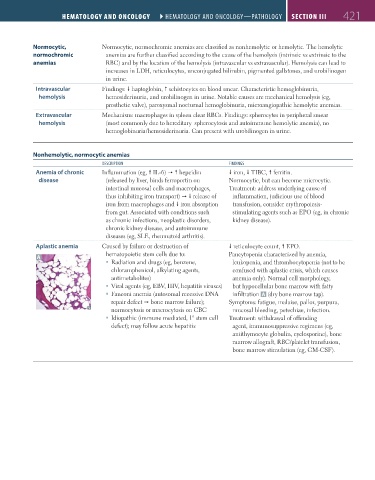
Fanconi anemia (autosomal recessive DNA infiltration A (dry bone marrow tap).
repair defect bone marrow failure); Symptoms: fatigue, malaise, pallor, purpura,
normocytosis or macrocytosis on CBC mucosal bleeding, petechiae, infection.
Idiopathic (immune mediated, 1° stem cell Treatment: withdrawal of offending
defect); may follow acute hepatitis agent, immunosuppressive regimens (eg,
antithymocyte globulin, cyclosporine), bone
marrow allograft, RBC/platelet transfusion,
bone marrow stimulation (eg, GM-CSF).
FAS1_2019_10-HemaOncol.indd 421 11/7/19 5:05 PM

