


Page 302 - The City and Guilds Textbook: Plumbing Book 1 for the Level 3 Apprenticeship (9189), Level 2 Technical Certificate (8202) and Level 2 Diploma (6035)
P. 302
The City & Guilds Textbook: Plumbing Book 1
28 15 (6) 15 (8) 13 (10) 19 (12) 22 (14)
35 15 (4) 15 (6) 9 (7) 9 (8) 13 (10)
42 and over 15 (3) 15 (5) 9 (5) 9 (5) 9 (8)
Source: Defra guidance to the Water Supply (Water Fittings) Regulations, Section 3, Schedule 2.
Note: 15 mm pipes with thermal conductivities of 0.030, 0.035 and 0.040 W/(m.K), shown
with a *, are limited to 50% ice formation after 9, 8 and 7 hours respectively. The figure in
brackets indicates minimum thickness for 12 hours frost protection.
9 BACKFLOW PROTECTION
Backflow and back siphonage risks in the
home
There are many instances in the home where backflow and back siphonage could
present contamination risks. These will need to be considered during any planning,
design and installation of hot and cold water supplies and central heating systems.
Let us look first at some of the appliances and systems we use, and consider the
risks. This will give you some idea of how the fluid categories occur.
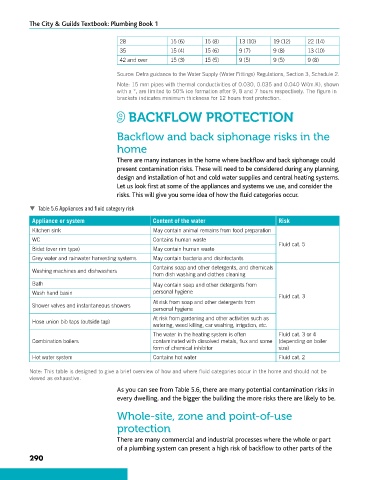
Table 5.6 Appliances and fluid category risk
Appliance or system Content of the water Risk
Kitchen sink May contain animal remains from food preparation
WC Contains human waste
Fluid cat. 5
Bidet (over rim type) May contain human waste
Grey water and rainwater harvesting systems May contain bacteria and disinfectants
Contains soap and other detergents, and chemicals
Washing machines and dishwashers
from dish washing and clothes cleaning
Bath May contain soap and other detergents from
Wash hand basin personal hygiene
Fluid cat. 3
At risk from soap and other detergents from
Shower valves and instantaneous showers
personal hygiene
At risk from gardening and other activities such as
Hose union bib taps (outside tap)
watering, weed killing, car washing, irrigation, etc.
The water in the heating system is often Fluid cat. 3 or 4
Combination boilers contaminated with dissolved metals, flux and some (depending on boiler
form of chemical inhibitor size)
Hot water system Contains hot water Fluid cat. 2
Note: This table is designed to give a brief overview of how and where fluid categories occur in the home and should not be
viewed as exhaustive.
As you can see from Table 5.6, there are many potential contamination risks in
every dwelling, and the bigger the building the more risks there are likely to be.
Whole-site, zone and point-of-use
protection
There are many commercial and industrial processes where the whole or part
of a plumbing system can present a high risk of backflow to other parts of the
290
9781510416482.indb 290 29/03/19 8:58 PM

