


Page 541 - The City and Guilds Textbook: Plumbing Book 1 for the Level 3 Apprenticeship (9189), Level 2 Technical Certificate (8202) and Level 2 Diploma (6035)
P. 541
Chapter 8 Rainwater systems


                 ACTIVITY

                 Calculation of effective roof area using pitch factors
                 Using the pitch factors given above, calculate the following effective roof areas.
                 1  A roof has a length of 12 m, a width of 7 m and pitch of 45°.
                 2  A roof has a length of 8 m, a width of 8 m and pitch of 60°.
                 3  A roof has a length of 10 m, a width of 8 m and pitch of 30°.

                                                                                            ACTIVITY
                 IMPROVE YOUR MATHS
                 We can now calculate the amount of rainwater to be expected on any given   Calculation of rainfall
                                                                                            rate in litres per second
                 roof area in a sudden storm deluge of 75 mm of rainfall per hour. To convert the
                 area to litres per second (l/s), multiply the roof area (m ) by 0.0208.    Using the effective areas
                                                                2
                 Example 3                                                                  calculated in the above
                 The area of the roof in Example 1 is 75 m 2 . What is the expected rainfall in l/s?  activity box, calculate the
                                                                                            rainfall rate in litres per
                    75 × 0.0208 = 1.56 l/s                                                  second.


                Running outlet position
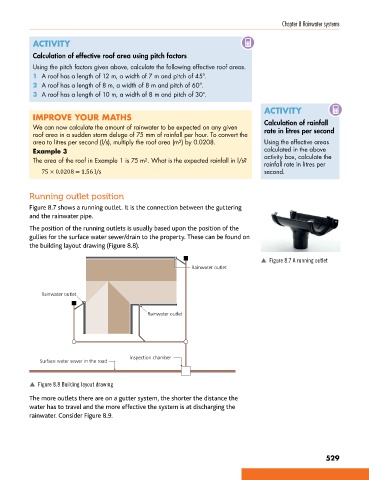
                Figure 8.7 shows a running outlet. It is the connection between the guttering
                and the rainwater pipe.

                The position of the running outlets is usually based upon the position of the
                gullies for the surface water sewer/drain to the property. These can be found on
                the building layout drawing (Figure 8.8).

                                                                                           p  Figure 8.7 A running outlet
                                                                    Rainwater outlet


                    Rainwater outlet


                                                      Rainwater outlet


                                                Inspection chamber
                   Surface water sewer in the road


                p  Figure 8.8 Building layout drawing

                The more outlets there are on a gutter system, the shorter the distance the
                water has to travel and the more effective the system is at discharging the
                rainwater. Consider Figure 8.9.


                                                                                                                529


        9781510416482.indb   529                                                                                    29/03/19   9:04 PM

